


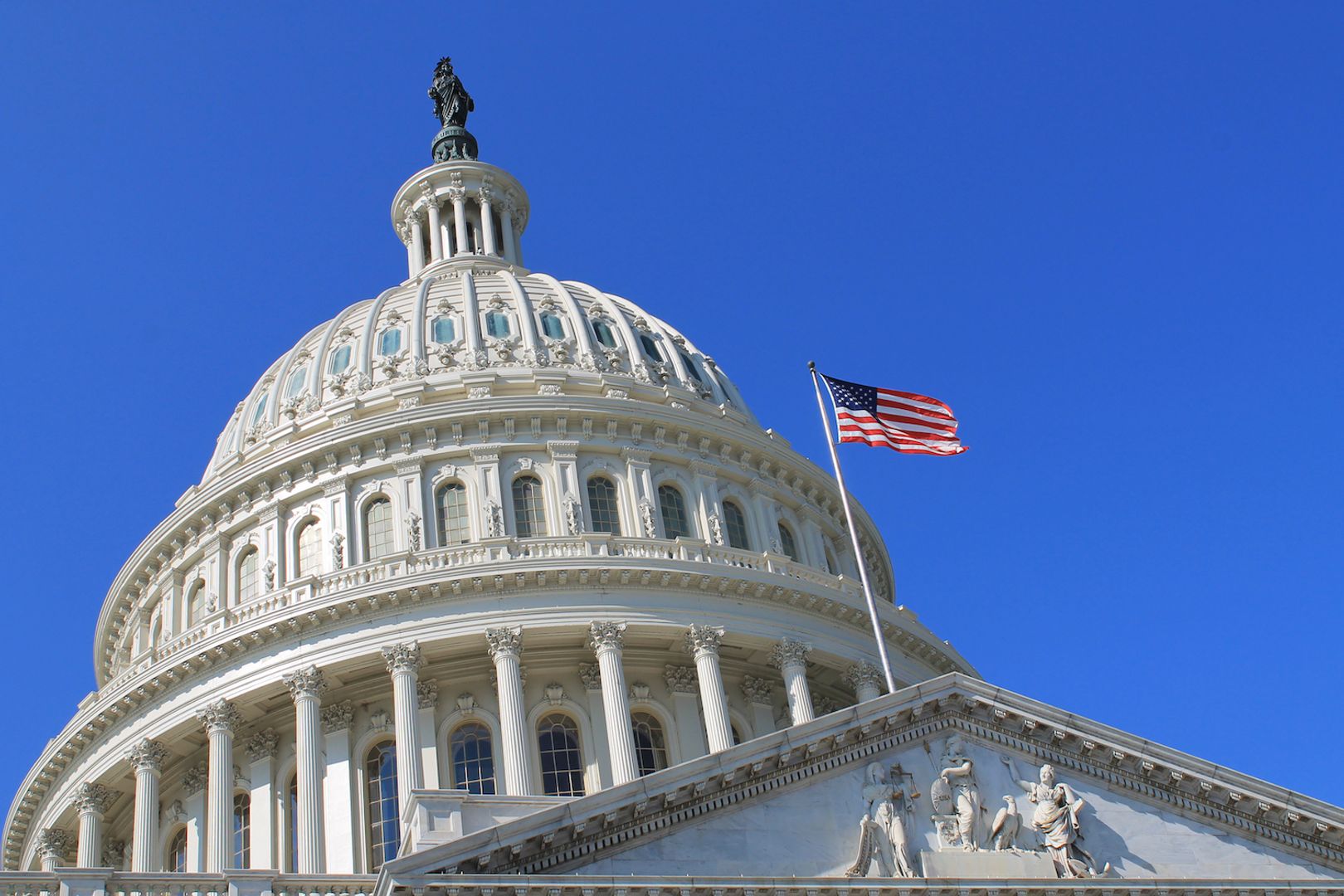
On Thursday, Congress took a small but significant step toward ensuring America remains the best place in the world to build. Bipartisan legislation – the Promoting Innovation in Blockchain Development Act of 2026 – would protect software developers from being swept up under criminal code Section 1960, a statute designed for money laundering, not innovation. For builders working in good faith on open-source software, that legal gray zone has cast a chill on American competitiveness.
It is one bill. But the principle it embodies reaches further than any single piece of legislation – and it arrives at a pivotal moment.
As the United States approaches its 250th anniversary this July, it is tempting to look backward to commemorate milestones and celebrate triumphs. But America’s most consequential moments have rarely come from preservation alone. They have come from renewal: building new systems that allowed the country to adapt to a changing world.
Every American century has been defined not just by ideals, but by infrastructure. Canals and railroads powered industrial expansion. Telecommunications connected a continental economy. The internet reshaped commerce, culture and capital markets. Each era rewarded those willing to build.
Today, the next layer of infrastructure is taking shape in code.
Software developers are the architects of modern economic systems. They shape how money moves, how markets function and how people coordinate on a global scale. Unlike the builders of past eras, many are globally distributed and highly mobile – choosing where to work and innovate based on clarity, opportunity and regulatory environment. Open-source development allows anyone, anywhere, to contribute foundational code. That work has produced billions of lines of software that are collectively maintained and power modern commerce and coordination.
At the same time, the nature of financial infrastructure itself is evolving. Where previous generations built physical rails, today’s builders are creating digital rails – protocols that move value, establish trust and operate at internet speed. These layers increasingly underpin payments, financial services, identity and ownership.
One illustration of this transformation is the growth of the developer ecosystem building on Solana. According to the most recent Electric Capital Developer Report, Solana was the leading ecosystem for new developers in 2024, growing 84% year over year. The Solana ecosystem shows how fast, low-cost, open infrastructure attracts and retains talent willing to invest in solving real problems – from payments and decentralized finance to identity and decentralized applications at scale.
This is not about hype or token prices. It’s about where infrastructure gets deployed, and whether the builders of tomorrow, who write the code that defines digital markets, feel a country welcomes innovation or obstructs it.
Globally, governments are recognizing this reality. Several jurisdictions have moved forward with clear frameworks for digital assets and blockchain-based systems, providing developers and entrepreneurs with predictability. This sends a signal: building is welcome here.
In the United States, there are encouraging signs of progress beyond Thursday’s bill. Under the leadership of SEC Chairman Paul Atkins, the Commission is shifting from a posture defined primarily by enforcement toward one focused on engagement, clarity and constructive rulemaking.
Developers and market participants do not expect the absence of regulation – they expect rules that are understandable, durable and aligned with how modern technology actually functions. Recent efforts to engage industry, solicit public input and distinguish bad actors from good-faith builders are an important step toward restoring confidence that the United States intends to lead, not lag, in the development of digital financial infrastructure.
We have seen this dynamic before. The early days of railroads, aviation and the internet were marked by experimentation and ambiguity. Regulation followed innovation, not the other way around. That sequence was not a flaw; it was a feature of leadership. It allowed the United States to set global standards rather than inherit them.
As we look toward America’s next 250 years, the same principle applies. Protecting the freedom to build – especially in open, general-purpose technologies – is a core American value. Writing code, absent intent to harm, is a form of expression and exploration. A nation founded on free speech and enterprise should be cautious about criminalizing innovation simply because it is new.
This moment is also an opportunity to renew American leadership in capital markets. Blockchain-based systems enable faster settlement, broader participation and more resilient market infrastructure – an evolution some have termed “internet capital markets.” These ideas are not about overnight disruption, but about upgrading the rails beneath existing institutions so they remain globally competitive.
The question before us is not whether these technologies will shape the global economy. They already are. The question is whether the United States will lead its development – or watch as talent, standards, and capital consolidate elsewhere.
America’s founders did not assume their experiment would succeed forever. They designed it so future generations could improve it. As we celebrate our nation’s 250th year, we face a similar responsibility: not to preserve the past unchanged, but to ensure that future builders still see America as the best place in the world to build.
The next American century will be written in code. The choice we make now determines where that code gets written.
www.coindesk.com
#bipartisan #bill #ensure #century #tech #written #America


