

Support CleanTechnica’s work through a Substack subscription or on Stripe.
Or support our Kickstarter campaign!
The big news this past week (other than what the lunatic in the White Man’s House was doing) was that the first Cybercab has rolled off the production line at the Tesla factory in Austin. People fainted or began speaking in tongues at the news — much the way they did when the first Cybertruck appeared.
But after the announcement, what are we left with? When it comes to manufacturing passenger cars, Tesla has put all its marbles on the Cybercab instead of addressing the competition, like BYD, Hyundai, Kia, Renault, Volkswagen, and many other actual cars companies that are working overtime to bring affordable electric cars to market.
True, the Cybercab will reportedly cost $30,000 or less, which is well below the average price of a new vehicle in the US today. But the question that has come up several times during our regular kombucha and pickled radish parties at CleanTechnica’s global headquarters is, “Who will buy these cars?”
Tesla has suggested no business case for the Cybercab. In fact, as of this moment (which could change at any second), we don’t really know for sure if the Cybercab will be equipped with normal controls — a steering wheel and pedals — or not. As Gizmodo points out, the official photograph of the first Cybercab shows the car immersed in a sea of smiling workers but provides no clues as to what is — or isn’t — inside.
Is there a steering wheel in there or isn’t there? We just don’t know, and Elon’s propensity for constantly muddying the waters with promises that are always a day away doesn’t help build trust in his unending stream of projections. Is he a brilliant engineer or just a flimflam man? The answer is probably “both.”
“There’s no fallback mechanism here. It’s like this car either drives itself or it does not drive,” Musk said during the Tesla earnings call in January. If that is so — a big if at this point — inquiring minds would like to know the answer to a few things.
Who Is The Target Audience?
For instance, who is the target audience for the Cybercab? Is it older drivers who are no longer able to drive themselves because their eyesight and motor skills have deteriorated? Is it entrepreneurs who will buy a dozen or so and let them race around earning money for them while they sip mint juleps in the sauna? Will Tesla own them and turn them into a fleet of self-driving robotaxis that funnel money into its corporate coffers?
No one knows the answers to these questions, at least not at this precise moment. But there is one question that troubles the staff here at CleanTechnica. When one of these machines injures or kills someone (or lots of someones), who will be responsible? Will individual owners need to secure their own insurance, and if so, at what cost? Or will Tesla finally take full legal responsibility for its autonomous vehicles, something it has aggressively failed to do until this point?
Punitive Damage Award Upheld
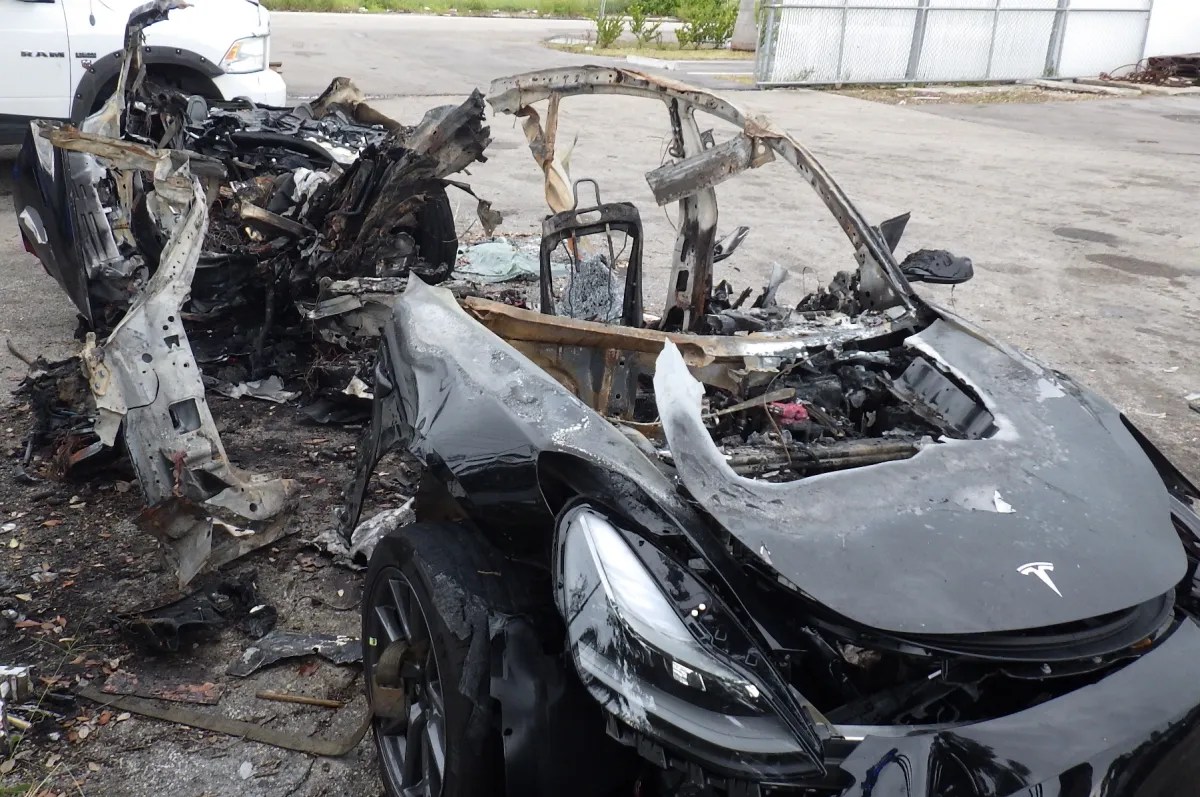
When a Tesla operating on Autopilot blew through a stop sign, crossed a main road, and slammed into a parked car, killing one person and critically injuring another in the Florida Keys, Tesla went to extraordinary lengths to suggest it was not responsible. The driver was at fault (and in fact he was held liable), the car was not being operated in accordance with section J, subparagraph 2 of the express instructions contained in the owner’s manual, which only a small fraction of Tesla owners have ever read, and so on.
When the estate of the deceased sued, Tesla went to great lengths to prevent the attorneys for the plaintiff from accessing relevant materials in the case as part of the normal pretrial discovery process. The jury listened carefully to all the arguments by both sides and awarded the plaintiff actual damages of $129 million and punitive damages of $200 million.
What are punitive damages? They are designed specifically to punish defendants whose conduct is so egregious that it shocks the conscience of the court — or the jury in this case. After the trial was over, Tesla asked the judge to throw out the jury award, claiming it was grossly excessive, and asked for a new trial. In a decision filed February 19, 2026, the presiding judge, Beth Bloom, wrote:
“After a careful review of the parties’ respective arguments, the Court finds that the Motion must be denied. The grounds for relief that Tesla relies upon are virtually the same as those Tesla put forth previously during the course of trial and in their briefings on summary judgment — arguments that were already considered and rejected.
“Furthermore, Tesla does not present additional arguments or controlling law that persuades this Court to alter its earlier decisions or the jury verdict. Therefore, because the Court finds that the evidence admitted at trial more than supports the jury verdict and does not find that it committed any error affecting Tesla’s substantive rights, the interest of justice does not require the grant of a new trial or judgment in Tesla’s favor on either Count I, Count II, or the jury verdict regarding punitive damages.”
In an email shared with CleanTechnica, Brett Schreiber, the lead trial counsel for the plaintiff, said, “We are of course pleased, but also completely unsurprised that the honorable Judge Bloom upheld the jury’s verdict finding Tesla liable for the integral role Autopilot and the company’s misrepresentations of its capabilities played in the crash that killed Naibel and permanently injured Dillon. Tesla’s arguments were simply an attempt to relitigate the court’s pre-trial rulings. We look forward to continuing our work holding Tesla accountable for its lies and gross misconduct in courts across America.”
Model 3 Fatalities

In a separate case in state court in Florida involving a fatal crash that killed the driver and passenger in a Tesla Model 3. In that case, the company was so belligerent in its refusal to provide relevant materials during discovery, the trial judge actually sanctioned the company, in an order dated October 23, 2025. Here is part of the judges ruling:
“Based on the evidence and testimony presented during the hearing on July 29 and 30, 2025, this Court finds that Tesla acted willfully or with contumacious and deliberate disregard to the discovery Orders entered by this Court on September 20, 2023, and November 6, 2023. Accordingly, the Court hereby GRANTS the Motion for Sanctions…..The Court does not find Tesla’s failure was substantially justified or that other circumstances make an award of expenses unjust.
The order went on to say that “Court orders and Florida Rules of Civil Procedure may cause the Court to impose critical and severe sanctions against the offending party, including instructing the jury with a special instruction (adverse inference), striking pleadings or defenses.” Tesla is so aggressive in it defensive procedures that a judge found its actions may be grounds for “critical and severe sanctions?” How messed up is that?
Caveat Emptor!
The upshot of these two rulings should put Cybercab buyers/lessors/users on notice that if there is litigation, Tesla will use every legal means — and extra-legal means, if necessary — to deny liability and leave them hung out to dry. That’s something a potential customer should weigh very heavily when considering whether to acquire a Cybercab unless and until Tesla makes it crystal clear who will pay when (not if) there is a serious or fatal misadventure while the car is in use.
The ownership model of the Cybercab has been explained in differing ways ever since Musk announced the idea in Oct. 2024. The chief designer for the Cybercab described the vehicle in December of 2024 as something that people could buy or lease “for the amount of time that you want,” describing it as “a different type of ownership experience than we’re 100 percent familiar with.”
Musk has described the vehicle as a car that consumers can buy, but which can join the Tesla robotaxi network to lease it out for ride shares when it’s not being used by the primary owner. But all of the details surrounding what that means, and who will actually “own” the vehicle, are a bit hazy, Gizmodo says.
Self Driving?
The great unanswered question is whether the Cybercab will truly be able to drive itself safely and reliably. The latest reports from Austin indicate Tesla Robotaxis are four times more likely to be involved in collisions than a human driver, Gizmodo reports. These are cars that are theoretically equipped with the very latest full self driving software, which hardly seems designed to inspire confidence that the Cybercab will be any better.
So what are we left with? A two seater car with a hatchback and scissor doors like those on a 1974 Lamborghini Countach. They are very popular with the low rider crowd but there is a reason why they have never been adopted by other manufacturers. Also, the list of two seater coupes for sale in America is short. Apart from the Ford Mustang and Chevy Camaro, almost all of them are ultra-expensive supercars from the likes of McLaren, BMW, Porsche, or Corvette. In other words, the demand for these cars is very limited.
It appears this is another example of Musk penchant for ruling by executive fiat. He is obsessed with the futuristic taxis he saw as a child in movies like Blade Runner and has ordered his engineers to build them without determining if there is a business case for them. That attitude has already ended in the Cybertruck debacle. Will the Cybercab be another face plant for the Great and Powerful Musk?
Those who can’t wait to park a Cybercab in their garage might do well to remember this song by Connie Francis.
Support CleanTechnica via Kickstarter

Sign up for CleanTechnica’s Weekly Substack for Zach and Scott’s in-depth analyses and high level summaries, sign up for our daily newsletter, and follow us on Google News!
Have a tip for CleanTechnica? Want to advertise? Want to suggest a guest for our CleanTech Talk podcast? Contact us here.
Sign up for our daily newsletter for 15 new cleantech stories a day. Or sign up for our weekly one on top stories of the week if daily is too frequent.
CleanTechnica uses affiliate links. See our policy here.
CleanTechnica’s Comment Policy
cleantechnica.com
#Tesla #Cybercab


