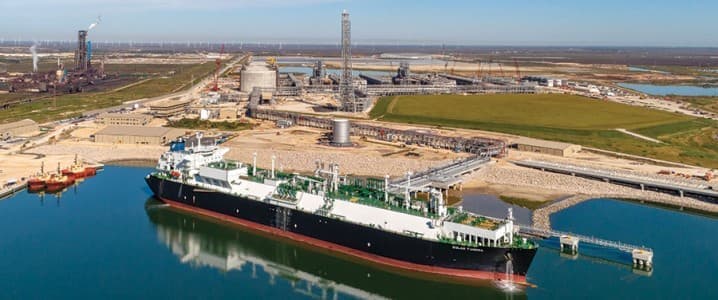
The Trump Administration could face an energy dilemma ahead of the midterm elections. The U.S. energy dominance agenda and booming LNG exports – pillars of the Administration’s policy – are boosting domestic natural gas demand and raising American energy bills.
U.S. LNG exports are hitting record highs, and are set to continue setting records in the coming months and years as new plants are being commissioned, built, and approved, with the strong backing of the Trump Administration.
However, soaring demand for feedgas from the export facilities is putting upward pressure on residential gas prices in the United States and on power prices, too, since the power sector is the top domestic gas consumer. Industry is the second-largest user of natural gas, while feedgas for LNG exports has now climbed to third, having outpaced residential gas use in recent years.
Record Gas Output, Soaring LNG Exports
The U.S. is estimated to have exported 15.0 billion cubic feet per day of LNG last year, up by over 25% from 2024, per data from the Energy Information Administration (EIA) in its latest Short-Term Energy Outlook (STEO).
LNG exports are set to continue rising to an annual average of 16.4 billion cubic feet per day (Bcf/d) this year, and further up to 18.1 Bcf/d in 2027, according to the EIA’s estimates.
Higher natural gas demand and prices are set to incentivize more drilling in the gas-directed shale basins Haynesville and Appalachia, while associated gas output from the Permian basin’s oil production is also set to rise as the increasing gas-to-oil ratio (GOR) will drive natural gas production growth despite wobbling oil prices.
As a result of these factors, total U.S. natural gas production is set to reach record highs in 2026 and 2027, the EIA reckons.
U.S. natural gas marketed production will increase by 2% to average 120.8 Bcf/d in 2026 and then further rise by another 1% to a record-high 122.3 Bcf/d in 2027, according to the administration. Appalachia, the Permian, and the Haynesville basins will drive this production growth.
So far, so good. Higher prices will drive higher production, which, in turn, could ease the upward pressure on gas and electricity prices.
However, the slight rise in supply faces soaring feedgas demand from LNG export facilities and surging demand for gas-fired generation to meet the power-hungry Big Tech firms and their plans to accelerate data center build-out.
The U.S. sees unprecedented power demand growth—AI infrastructure, data centers, and advanced manufacturing are driving the first meaningful growth in U.S. power consumption since the 1990s. The growth is set to average about 2% each year over the next decade, making new electricity generation capacity critical to supporting the advance in AI and the onshoring of manufacturing.
finance.yahoo.com
#Trumps #Energy #Dominance #Clashes #Soaring #Bills #Home