Michael Saylor, the outspoken Bitcoin (BTCUSD) advocate and executive chairman of Strategy (MSTR) (formerly known as MicroStrategy), kicked off his aggressive accumulation strategy in 2020 when BTC hovered around $11,000. Undeterred by volatility, he ramped up purchases through bull and bear markets, amassing holdings even as the cryptocurrency was soaring to a peak above $126,000 last October.
Today, Strategy owns 712,647 Bitcoin with an average purchase price of $76,037. But overnight, Bitcoin plunged below $75,000 amid a broader crypto selloff, marking the first time the company’s massive treasury is underwater with unrealized losses exceeding $900 million. This reversal erases recent gains and raises alarms about Saylor’s leveraged bet. Just how bad does it have to get before Strategy is in real financial trouble?
www.barchart.com
Strategy is a provider of enterprise analytics and AI-powered business intelligence software, enabling organizations to make data-driven decisions through cloud-native platforms. Headquartered in Tysons Corner, Virginia, and listed on Nasdaq under MSTR, it has evolved into the world’s largest Bitcoin treasury company, holding BTC as a primary reserve asset to hedge against inflation and drive shareholder value. This dual identity blends traditional software operations with cryptocurrency exposure.
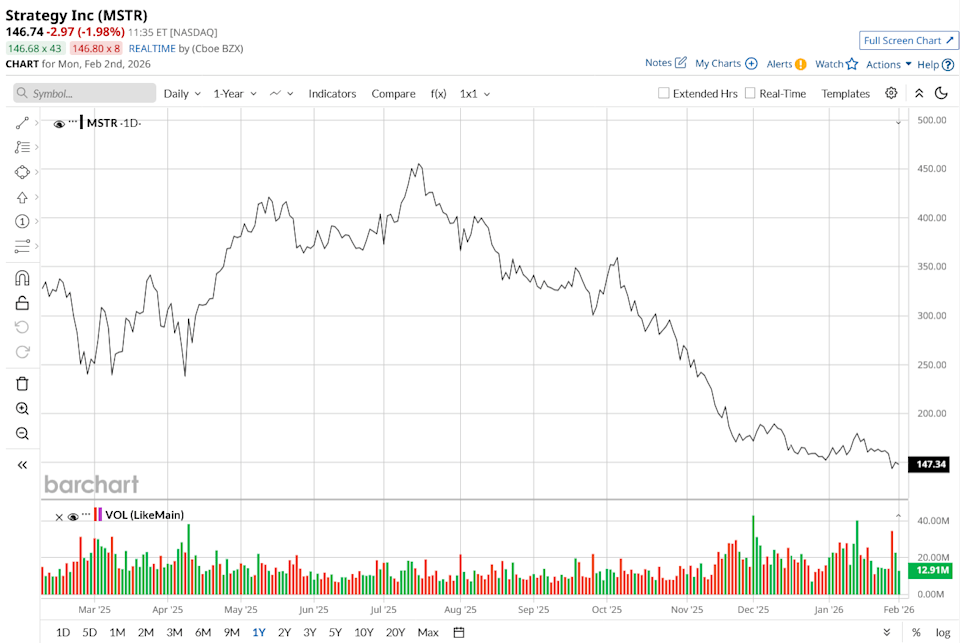
In 2026, MSTR stock is down about 4% year-to-date (YTD), underperforming the S&P 500’s ($SPX) 1.7% gain over the same period. Over the past year, however, MSTR has plummeted 56%, starkly contrasting the S&P 500’s 15% rise, reflecting Bitcoin’s volatility spillover.
Valuation metrics show a mixed picture: the trailing P/E ratio stands at 6.7, far below the software industry’s average of 28, indicating potential undervaluation based on earnings, especially if BTC rebounds boost profits. The forward P/E is even lower at 2, suggesting weak expected growth. However, the price-to-sales ratio of 89.4 is extraordinarily high compared to the industry’s typical 5 to 10, driven by market pricing MSTR as a Bitcoin proxy rather than on software revenue alone—versus its historical P/S average of around 100 during peak BTC enthusiasm. Overall, MSTR appears overvalued even for risk-tolerant investors betting on a crypto recovery, let alone for more conservative investors.
Strategy’s aggressive Bitcoin strategy, while innovative, carries inherent risks tied to price fluctuations, as seen with the recent plunge below $75,000, inflicting $900 million in unrealized losses. But true financial ruin—potentially forcing asset sales or bankruptcy—would likely not emerge until Bitcoin falls to $25,000 or below. At that level, the value of Strategy’s holdings would drop to around $17.8 billion, potentially falling short of covering its outstanding debt obligations, which include convertible notes totaling several billion dollars maturing in coming years.
This “point of no return” could trigger margin calls, liquidity crunches, or covenant breaches, especially given the company’s reliance on equity raises and high-interest preferred stock dividends—recently hiked to 11.25%—to fund further purchases.
Analysts are split on Bitcoin’s trajectory. Most forecast a mid-$70,000 stabilization in early 2026, citing potential Federal Reserve rate cuts and institutional inflows as supportive factors. For instance, projections from sources like Changelly suggest an average of $134,000 by year-end, with highs still predicted up to $153,000 amid regulatory clarity.
However, a growing chorus of bearish voices warns of steeper declines to $30,000 or lower, driven by macroeconomic headwinds like hawkish Fed policies, geopolitical tensions, and reduced momentum from retail and ETF buyers. Crypto analyst Ben Cowen has even floated scenarios of a prolonged bear phase into summer 2026, potentially testing $10,000-$20,000 lows if correlations with equities intensify.
Such a plunge would exacerbate Strategy’s woes, slowing its ability to raise capital at premiums and straining cash flows from dividends and operations. While the company maintains no immediate forced selling risk—thanks to unencumbered BTC and cash reserves—the leverage amplifies its downside. If BTC holds above $70,000, Strategy could weather the storm, but below $50,000 and dilution from share sales becomes inevitable, eroding shareholder value.
Consensus analyst ratings for MSTR remain bullish, with a “Strong Buy” overall from Barchart data. Coverage includes 16 analysts, breaking down to 13 “Strong Buys,” one “Moderate Buy,” two “Holds,” and zero sells, reflecting strong confidence in its Bitcoin treasury play despite recent volatility. This rating has held fairly steady as a “Strong Buy” over the past three months, with no notable downward shifts in consensus opinion amid the crypto winter — though some have trimmed targets slightly to account for near-term pressure.
Its mean target of $464.36 represents a potential upside of 211% from the current share price around $146. This implies significant recovery potential if Bitcoin rebounds, positioning MSTR as a leveraged bet on crypto’s resurgence.
www.barchart.com
On the date of publication, Rich Duprey did not have (either directly or indirectly) positions in any of the securities mentioned in this article. All information and data in this article is solely for informational purposes. This article was originally published on Barchart.com
Analyst Report: Exxon Mobil Corp. finance.yahoo.com #Analyst #Report #Exxon #Mobil #Corp Related reading:Micron’s stock falls as investors wonder if the…