Support CleanTechnica’s work through a Substack subscription or on Stripe.
Or support our Kickstarter campaign!

California hit another ZEV sales milestone last month, and state officials did not waste any time sending the message to US President Donald Trump along with anybody else aiming to place obstacles in the path of the vehicle electrification movement: US presidents come and go, and so do members of Congress, but transportation decarbonization is here to stay.
California To Trump: Look At Our ZEV Sales, Nyah, Nyah, Nyah
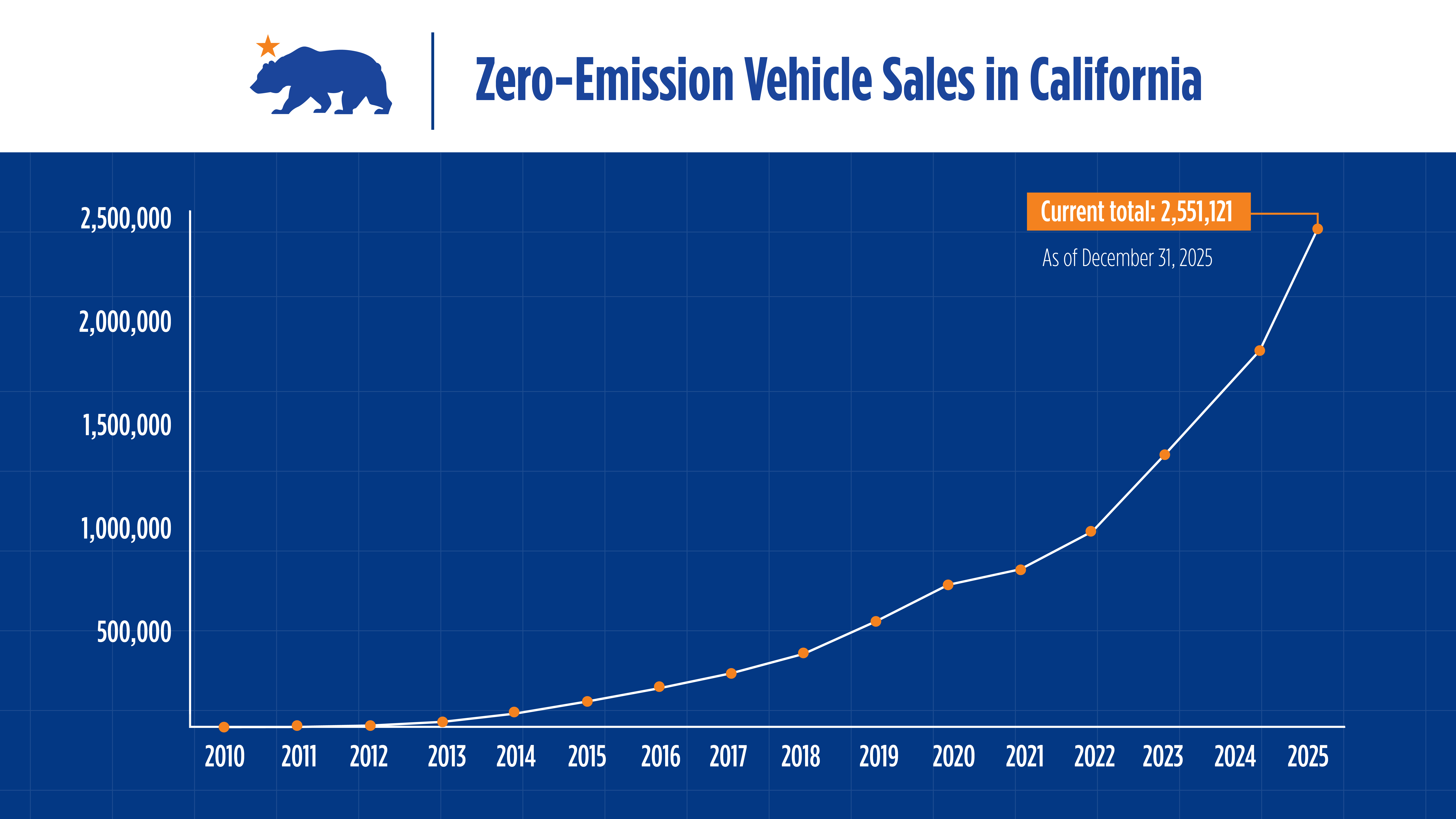
The latest ZEV numbers from the California Energy Commission rolled out last week, meaning a combination of 100% battery EVs, plug-in hybrid EVs, and a vanishingly small number of fuel cell EVs. “During the fourth quarter of 2025, Californians purchased 79,066 new zero-emission vehicles (ZEVs), representing 18.9% of new car sales. During this timeframe, California surpassed 2.5 million new ZEV sales, an important milestone for the state,” CEC announced on January 20.
“Each quarter, even in the face of increasing federal headwinds, tens of thousands of consumers are purchasing a ZEV in the Golden State,” CEC Commissioner Nancy Skinner said, referring obliquely to the premature death of the $7,500 EV tax credit last September 30, among other headwinds.
The Chair of the California Air Resources Board, Lauren Sanchez, chipped in her two cents, too. “While the federal government reversed and put up roadblocks, the global zero-emission vehicle market surged ahead last year,” Sanchez reminded everyone.
CEC also took the opportunity to remind everyone that ZEV are just better. “Not only do ZEVs reduce air pollution, but they’re also fun and powerful to drive and cost less to maintain compared to gas-powered vehicles,” CEC enthused.
It’s Official: ZEVs Clean Up Neighborhood Air
Short as it is, CEC’s quickie plug for zero-emission vehicles underscores a significant shift in the alternative vehicle sales and marketing strategy, from an environmental choice to the less politically fraught appeal to pocketbooks and performance.
The note about reducing air pollution also reflects a shift in focus from preventing catastrophic climate change to improving local air quality, and that’s where the new USC research comes in.
The researchers zeroed in on light-duty vehicles (cars, SUVs, pickup trucks, and vans). They divided California into 1,692 neighborhoods similar to zip code delineations, and compared ZEV registrations in each neighborhood with data from a high-resolution satellite sensor that measures pollutants, including the tailpipe emission nitrogen dioxide.
Covering the period from 2019 to 2023, the team found that NO₂ levels dropped 1.1% for every 200 ZEVs registered. Concurrently, they also confirmed that neighborhoods experiencing a rise in gas-powered vehicles during that period also experienced a rise in pollution (see the full study here or a summary here).
The improvement in air quality from electric vehicles was small but significant, considering that NO₂ is linked to asthma, bronchitis, and increased risk of heart disease and stroke. In addition, as of 2023, only a small proportion of all vehicles registered in California were zero emission. According to the USC team, zero emission registrations rose from 2% to 5% of all vehicles by the end of the study period, leaving plenty of space for further reductions in NO₂ emissions as the switchover to electric vehicles continues.
The researchers — based at the Keck School of Medicine — also note that a 2023 study deploying ground-based monitors suggested a link without reaching a definitive conclusion. The switch to high-resolution satellite data filled in the gap, helping to cement the science and public health case for continuing to fund satellite-based monitoring.
Next steps for the team include documenting “real-world” public health impacts by comparing their data with statistics on emergency visits and hospitalization treatments for asthma in California.
So … What About Tesla?
Of course, no story about the California auto market is complete without a mention of industry leader Tesla, and that’s where things get interesting.
In terms of overall new vehicle sales in California, gas or electric, Tesla was riding high in years past, holding down the #2 position with only Toyota to beat. However, the latest report from the trade organization California New Car Dealers Association reflects the company’s ongoing brand reputation crisis.
CNCDA noted that Toyota once again claimed the #1 spot in 2025 at 17.8% market share, but Honda inched past Tesla to claim #2 at 10.8%.
“By contrast, Tesla registrations declined 11.4 percent in 2025 with market share dropping from 11.6 percent in 2024 to 9.9 percent in 2025 as it slipped to third place in the state,” CNCDA reported.
“This extends a two-year downward trend for Tesla despite the temporary boost from federal incentives,” they added with a twist of the knife (see lots more background on Tesla sales here).
Tesla Or Not, ZEVs Are Here To Stay
“Downward trend” is putting it mildly. In July of 2025, CleanTechnica took note of the outsized impact of Tesla on overall ZEV sales in California, which rode on Tesla’s coattails in the early 2000s only to falter alongside Tesla’s crash-and-burn performance in recent years, widely attributed to CEO Elon Musk’s outsized influence on right-wing politics.
Other automakers made up some of the difference. Though, as of last August, Tesla still outsold its EV competitors in California by a long shot.
While Tesla is still sitting in the BEV catbird seat, its grasp on the overall ZEV market is, well, not such a sure thing. Unlike legacy automakers and some EV startups (looking at you, Scout Motors), Tesla has steadfastly refused to dip its toes in the hybrid gas-electric waters, and that may come back to haunt it.
“Notably, hybrid sales slightly outpaced ZEV sales in Q4 alone, capturing 20.4 percent of the market, reflecting sustained consumer interest in lower-emission options that do not require installation of charging infrastructure or major lifestyle changes,” CNDC reported.
Competition is also looming within the BEV field. Despite the loss of the federal EV tax credit, and regardless of pullbacks on EV plans by some automakers, new activity continues to stir in the US market. Toyota, for example, is following through on plans to bring an all-electric version of its C-HR crossover to the US this year, which is an interesting move considering that a gas-powered version of the car failed to gain traction here.
Tesla, and other automakers, will also have to contend with a coming tsunami of off-lease used EVs on the market. If you have any thoughts about that, drop a note in the comment thread.
Image: California continues to celebrate strong ZEV sales despite the efforts of President Trump, and his Republican enablers in Congress, to throttle down the vehicle electrification movement (courtesy of CEC).
Support CleanTechnica via Kickstarter

Sign up for CleanTechnica’s Weekly Substack for Zach and Scott’s in-depth analyses and high level summaries, sign up for our daily newsletter, and follow us on Google News!
Have a tip for CleanTechnica? Want to advertise? Want to suggest a guest for our CleanTech Talk podcast? Contact us here.
Sign up for our daily newsletter for 15 new cleantech stories a day. Or sign up for our weekly one on top stories of the week if daily is too frequent.
CleanTechnica uses affiliate links. See our policy here.
CleanTechnica’s Comment Policy
cleantechnica.com
#California #Takes #ZEV #Sales #Victory #Lap #Trump #Trump
![Classic Jeep Grand Wagoneer gets an electric makeover [video]](https://i1.wp.com/electrek.co/wp-content/uploads/sites/3/2025/11/grand-wagoneer_EV_2.jpg?quality=82&strip=all&w=1600&ssl=1 "Classic Jeep Grand Wagoneer gets an electric makeover [video]")