


Are you tired of career-based racing games? Bored with cruising the same open world, doing slightly different variations on the exact same speed challenge? Finally burned out with running a completely unhinged taxi service in whichever Grand Theft Auto suits you? Over the idea of posing your Night City creations against the 17,000th (ray-traced!) backdrop? I have an alternative to offer you: City builders.
More specifically, the Cities: Skylines series, because deep down, these games are all about cars. Whether you design your city to accommodate them, augment their use, or just exclude them entirely, cars are a critical component of urban design, and that role is reflected in the games that simulate it. And believe it or not, managing that sort of thing can be surprisingly engaging—even fun. And that’s especially true now, because after two years, Cities: Skylines II is complete enough that I’m finally comfortable recommending it to casual audiences. If you’re not familiar with the game (or its dodgy development history), let me catch you up.
While it was directly inspired by the company’s previous city sims (Cities XL, Cities in Motion, et al), Cities: Skylines was more of a spiritual successor to another ill-fated city builder: SimCity (2013). The most recent (and final, it now appears) entry in the SimCity franchise was a game built in the spirit of peak Top Gear: Ambitious, but rubbish. It tried to do two things that no city builder had done at that scale. One was multiplayer. The game’s always-online requirement (a sticking point with fans who simply wanted to build their cities in solitude) was justified by the implementation of multi-mayor regions that could pool together to build massive infrastructure projects, such as international airports.
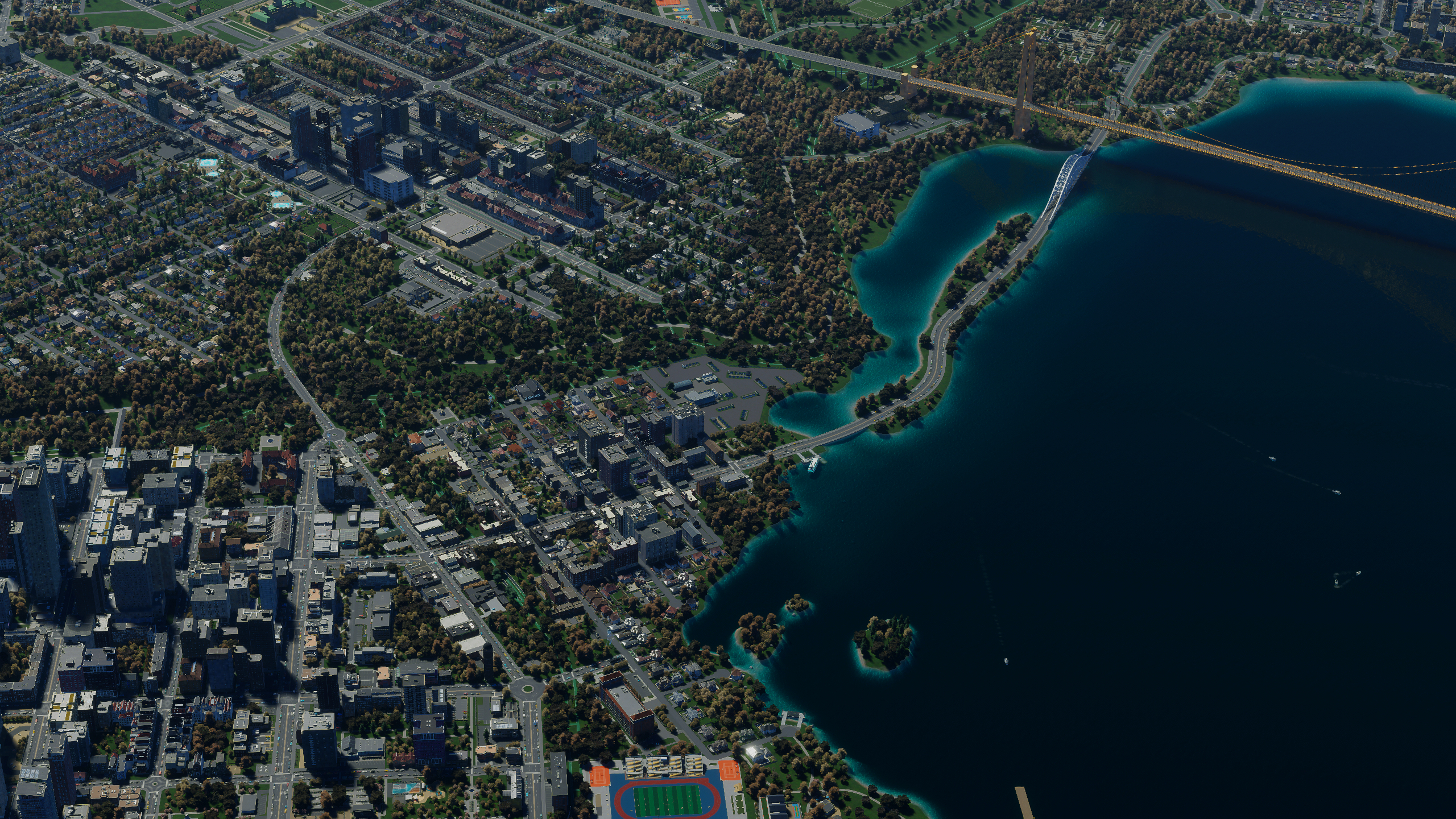
It was a neat idea, but it was ultimately held back by the game’s comically small scale, which was a consequence of its other genre-busting advancement: agent-based simulation.
Allow me to get into the weeds here briefly: There are essentially two ways to go about making a game like this: you can either use fuzzy math to represent a population and tell the game to animate the scene in such a way that would approximate reality. Alternatively, you can go all-in and build an entire ecosystem that represents a city 1:1. Every person, every car, every gallon of water—even every pet, as we’ve seen more recently. This is called an agent-based simulation. If it moves around the city in any way, it’s represented by an agent. And the game has to keep track of every single one, pretty much all the time.
The granularity of it is appealing. Watching people go about their day makes the city feel alive in a way that wasn’t conveyed in previous games. It’s also murder on your PC’s computational capacity. SimCity’s developers quickly learned that 2013 hardware was not prepared to scale up to the size of a typical real-world city, so the maps were made incredibly tiny (less than one square mile) and locked that way to keep performance in check, effectively turning it into a highly demanding diorama builder. The game stuck around long enough to deliver its promised DLC before being abandoned entirely.
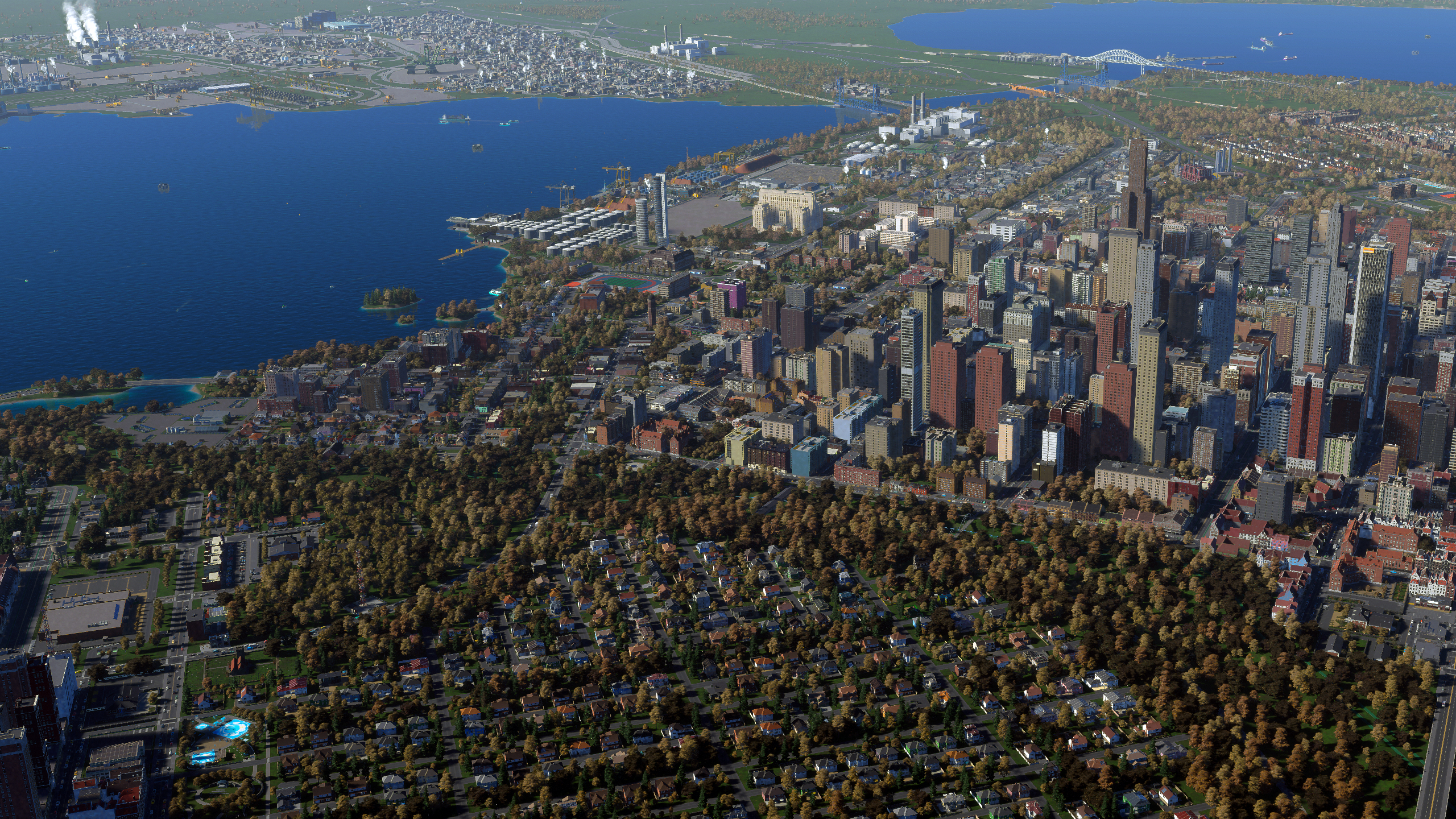
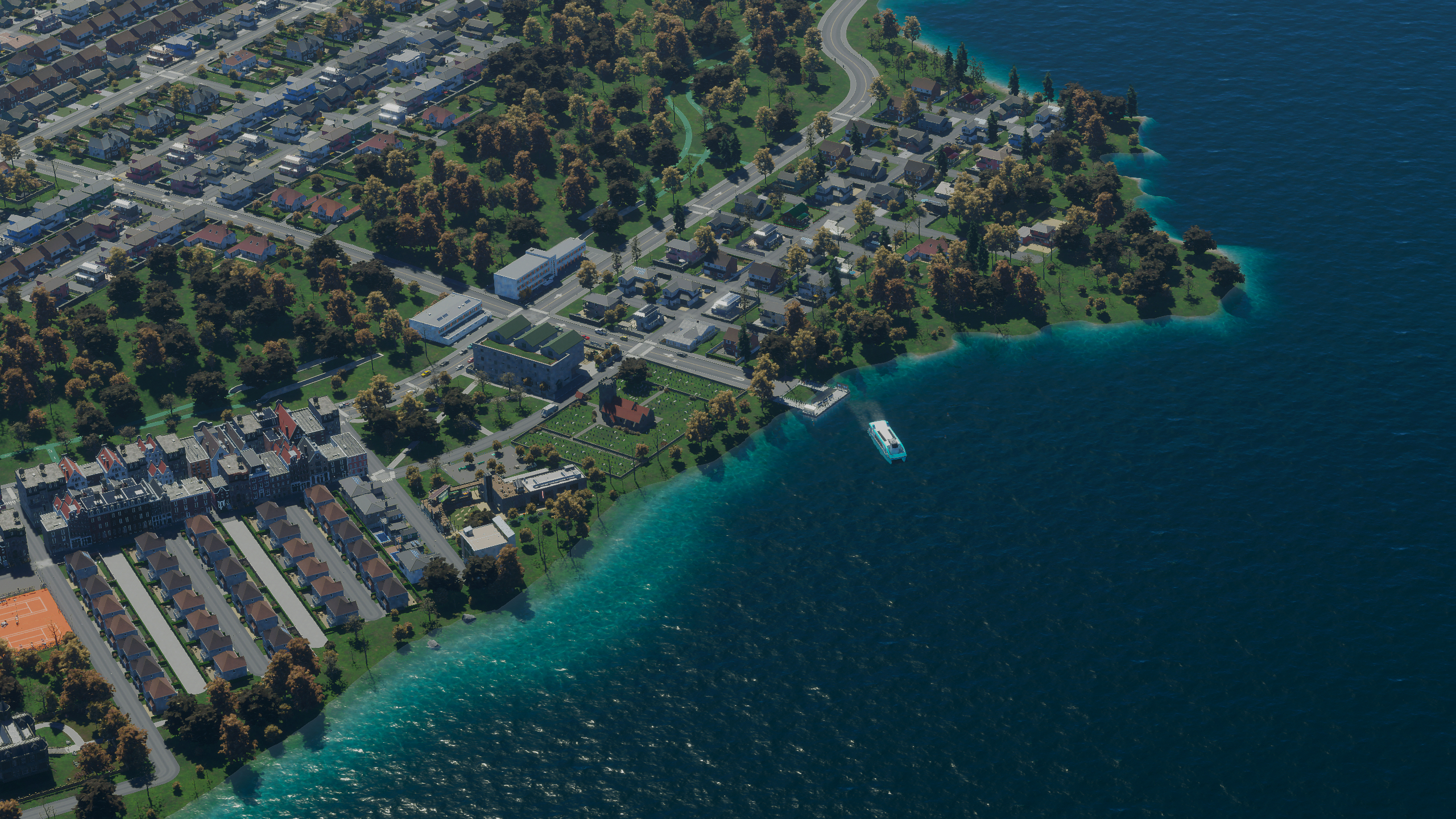
When Cities: Skylines came out two years later, it blew the genre wide open. Not only did it effectively copy SimCity’s agent-based approach, but it did so without so many limitations—and without the forced online component. The maps were much larger and the performance far more forgiving. It even copied SimCity’s somewhat whimsical playfulness (minus the llama fixation), but if you weren’t a fan of the default architectural styles or color palette, the game’s bottomless workshop of user-created mods (another option locked out by the always-online approach of SC2013) allow you to change the window dressing (and much of the core game logic) to your heart’s content.
While there’s still a healthy, mod-driven community out there for SimCity 4 (the entry prior to the 2013 game), by and large, the city builder community flocked to Cities: Skylines. As its popularity snowballed and the community eagerly consumed frequent paid content updates, a sequel became inevitable. It promised even fewer restrictions, larger maps, a deeper simulation, and an overhauled (Unity) engine that would amp everything up for the game’s thriving community of city-building content creators.
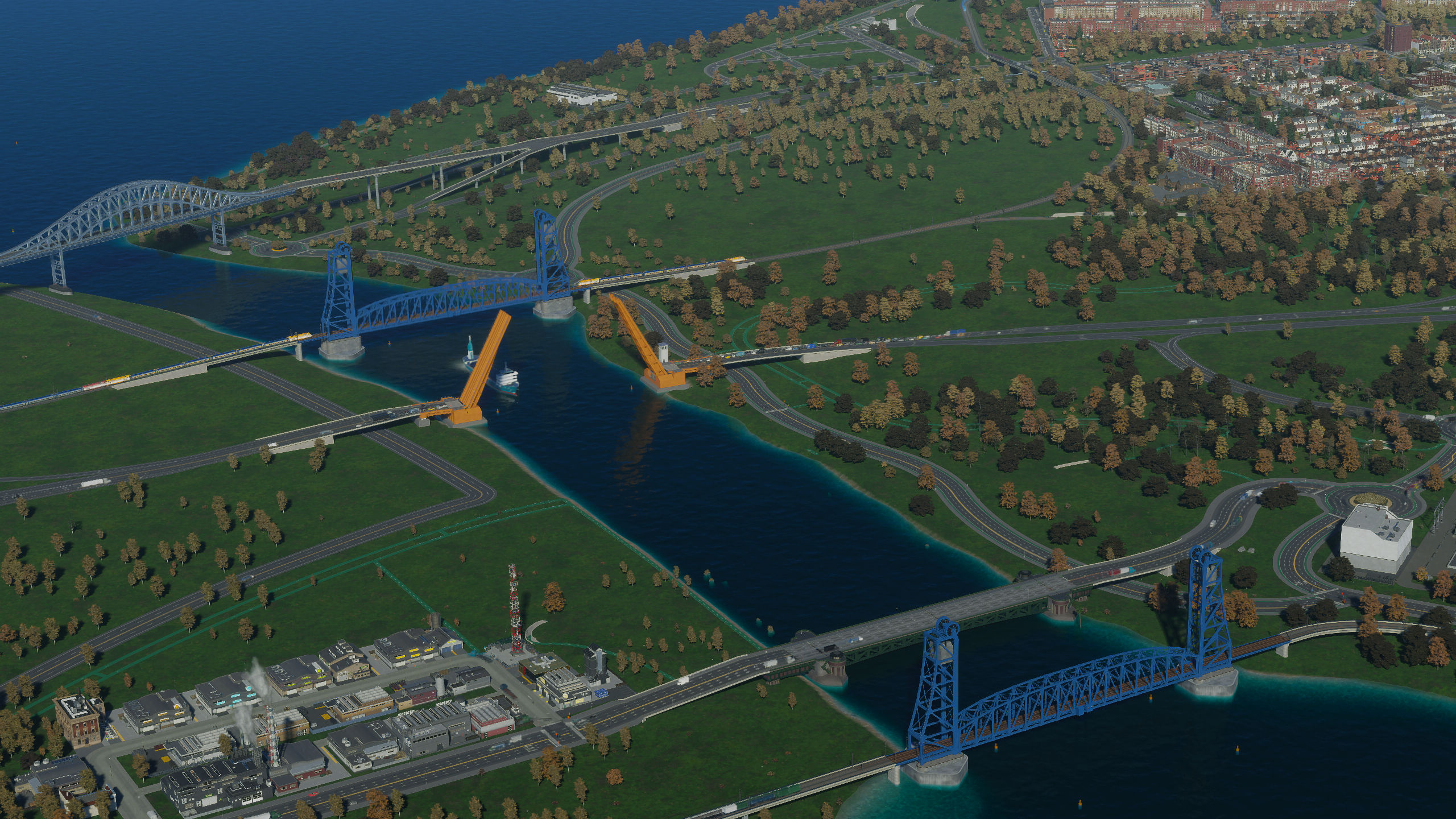
It finally dropped in 2023. And let me tell you, friends, it was hot garbage. The performance was awful, the simulation itself was incomplete, and the graphics were so poorly optimized that high-end systems were effectively running slideshows if they actually wanted their cities to look any better than the previous entry’s. The game loops were patched together with enough safety valves that it was possible to fail your way to a large city that was ultimately doomed to collapse under its own scale, pretty much without warning. Oh, and you’d only find out after hours of watching the sim stutter its way through an awkwardly implemented time and weather system that was frequently more of an inconvenience than a boon. To this day, whenever it snows, every car in the game drives around with its windshield completely covered.
But the true insult was the lack of mods. The modding community is Cities: Skyline’s lifeblood. Without it, we wouldn’t even be talking about CS2. Colossal Order (the game’s original developer) made the first game’s mod editor available almost immediately after it launched. The community was promised mods “soon” after CS2’s release; they kept their promise in a fashion, enabling “code” mods via a beta editor in early 2024. But “code” mods don’t include simple things like custom building or vehicle models/textures, meaning everybody was working off the same, limited rotation of randomly spawned vanilla buildings. Colossal Order shoveled several regional content packs out the door to help address this, but the broader modding community was shut out of the process entirely, and has remained so since the game launched.


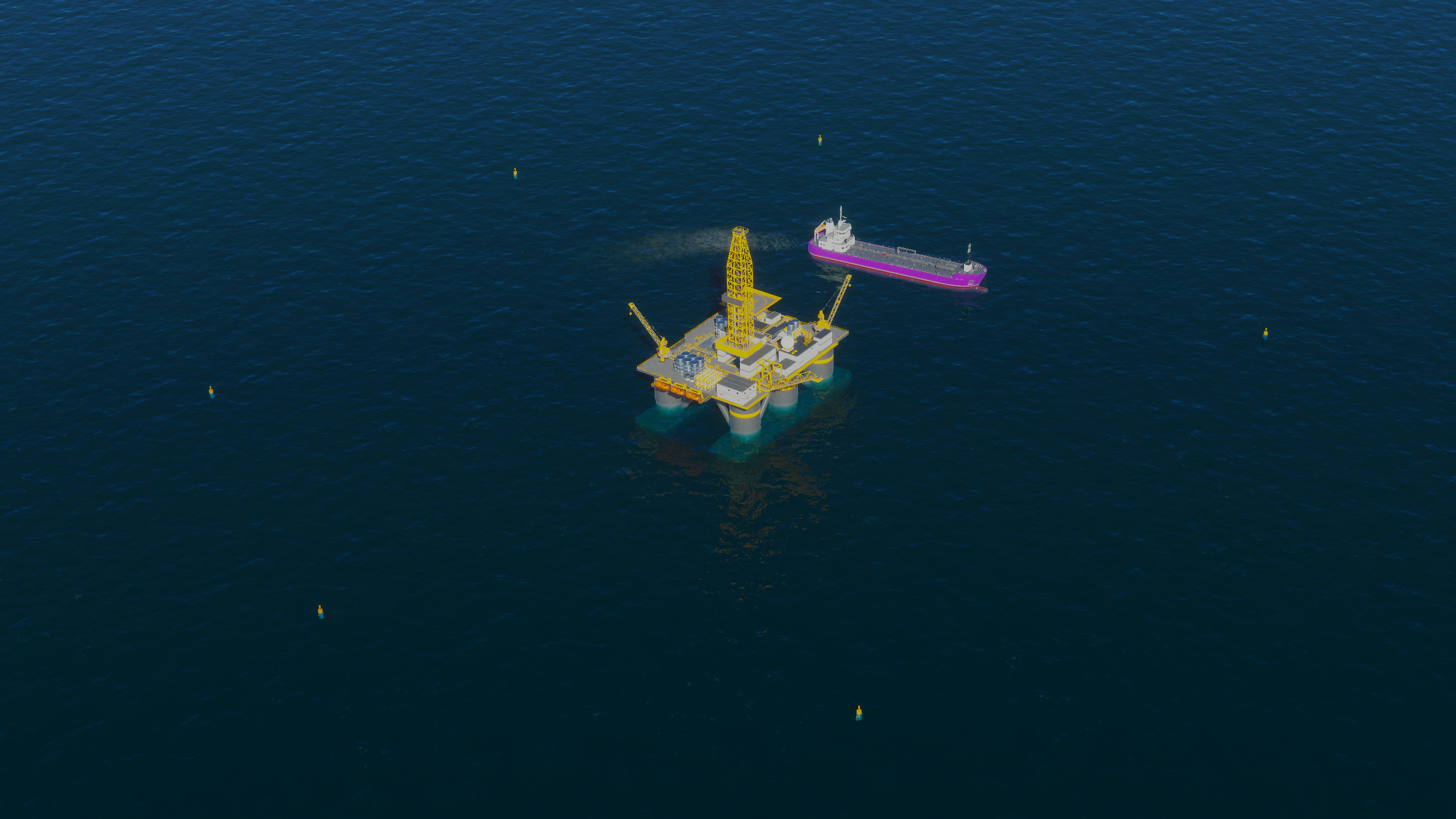
That was in October of 2023. As I’m writing this, the asset editor has been live for about eight hours. Yes, it took two years, but we’re finally here. Some of the community’s best have already started cranking out new buildings. And that’s not the only big update the game received in recent weeks. On top of the editor, Colossal Order finally patched bicycles into the game and released the long-delayed Bridges and Ports DLC. And then they got fired, but that’s a story for another venue.
We also got the first two “creator” packs that fell outside the scope of the deluxe pre-order bundle: Skyscrapers and Supply Chains. These are technically just bundles of community-sourced assets, but they’re directly commissioned by the studio and released like old-fashioned DLC. They’re cheap and they support modders, so they tend to be popular. Both of these include buildings with unique mechanics. Skyscrapers bundles expandable, mixed-use commercial/residential buildings with integrated public services and transit options, along with high-rise headquarters for some services. They look nice and fit the game’s default art style perfectly.
Supply Chains comprises a series of signature industrial and office buildings that offer various economic perks, along with attractive jobs. Combined with the new industry features that were incorporated into Bridges & Ports, they offer ways to specialize and expand your industry to best support (or define) your city’s economy. Consequently, there’s finally something more to do in Cities: Skylines II than just manage traffic.
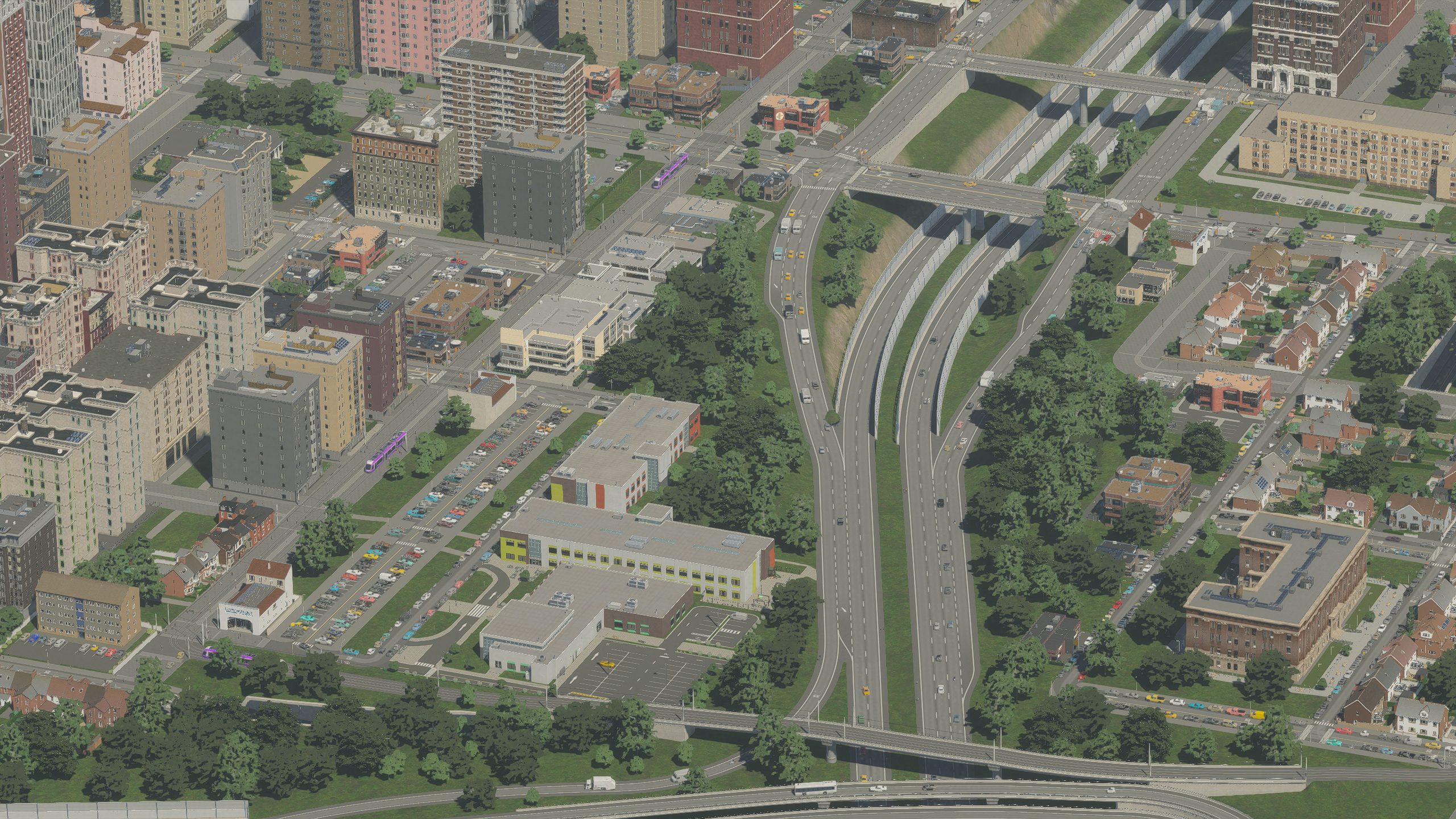
Oh, and there’s also a lot more traffic.
If you’ve ever played either Cities: Skylines game, you know that much of the core gameplay revolves around traffic management. Because of the game’s relatively unfinished state, the developers had actually tuned traffic down slightly for several patches while aspects of the simulation were ironed out. With Bridges & Ports, the devs flipped that switch back to full-blast, which dramatically increased the number of trucks generated by industrial and port areas. And because buildings throughout your city need resources delivered in order to level up (think renovation or remodeling), those trucks are going to wander into your residential, commercial, and office districts, too. Car infrastructure designed to handle previous game versions may struggle to contain the increased volume.
Bicycles pose a unique challenge on this front. This time around, they can use normal travel lanes, dedicated on-road bike lanes, or separate bike paths, which are offered in one-way variants so you can build your own cycle superhighway with flyovers and everything. Because the game treats bikes like a hybrid between cars and pedestrians, they offer similar advantages and drawbacks, including the ability to cause traffic jams. If you expect citizens to bike to large transit hubs (airports, etc.), you’ll need to provide parking accommodations for them.
The game remains far from perfect, but we’ve reached the point where it’s serviceable enough to be worth your time, especially if you’re a fan of the city builder genre. Think of it like the world’s biggest digital car mat—only you get to build it from scratch.
The author paid for the dubious privilege of owning Cities: Skylines II on launch day and has received no consideration or access from Colossal Order, Paradox Interactive, or Iceflake Studios. This was an unsolicited review.
Do you know the inside story of Cities: Skylines II’s messy release? Reach out to the author at byron@thedrive.com. Got a general car news tip? Let us know at tips@thedrive.com.
www.thedrive.com
#Skylines #Secretly #Car #Gameand #Doesnt #Suck #Anymore


