When someone mentions the Jeep Cherokee, car people bring up the XJ. It’s inevitable. The XJ wasn’t the first-generation Cherokee; that honor belongs to the old-school SJ, but it became the gold standard for fixed-roof Jeeps when it was discontinued in 1984. It continued on a mighty run for 17 years, and ever since it went away, we’ve been wondering if the 4×4 brand could rekindle the magic from that unkillable unibody off-roader.
Can the revived and hybridized 2026 Jeep Cherokee do the job?
The answer is “no” if the job you’re asking it to do is displace the XJ. It’s almost nothing like the old girl in theory or in practice. But the answer gets a little more complicated than that if, like Jeep, you’re asking it to compete in the ever-crucial midsize SUV segment. I spent a day driving it through the pouring rain in California’s Santa Monica Mountains, trying to keep it shiny side up while picking out what works, what doesn’t, and whether anyone should buy one.
What I’ll say from the start is this: Jeep has seemingly built a much better Cherokee with this new model. It’s roomy, it’s way more efficient, and it looks better than the last one. But it’s far from the XJ most Jeep freaks know and love.
If you’ll remember, the Cherokee was discontinued for several years after Jeep canceled the previous model in 2023. The comeback is important, as Jeep went three years without an answer to some of the country’s best sellers. While Honda and Toyota were moving more than 400,000 CR-Vs and RAV4s apiece every year, the brand with the seven-slotted grille had nothing. Nada.
The 2026 Cherokee is born out of that need. It once again slots between the Compass and Grand Cherokee in pretty much every way, except for fuel economy. The Cherokee outperforms both of its stablemates there, and not by a little. While the smaller Compass can only muster 26 miles per gallon combined with its turbo 2.0-liter, the Cherokee sips the stuff in comparison by netting 37 mpg combined.
This arguably couldn’t happen without a new 1.6-liter turbo-hybrid that, for now, is the only powertrain available on the Cherokee. It makes OK power, with 210 horsepower and 230 lb-ft of torque that’s sent to all four wheels through an e-CVT. Play your cards right, and you’ll exceed 500 miles per tank, easy. It’s not like it has some huge capacity, either, at just 13.7 gallons.
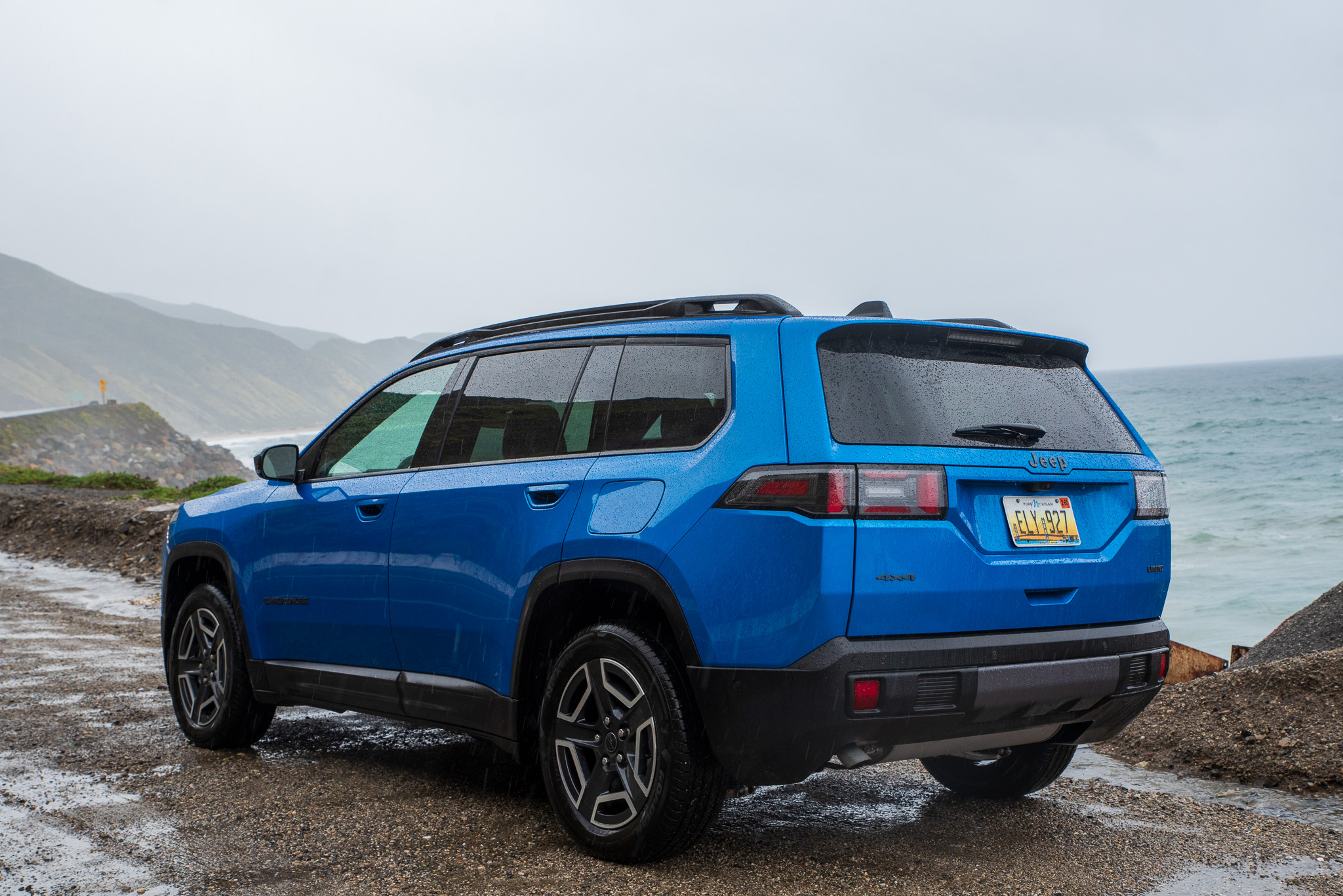
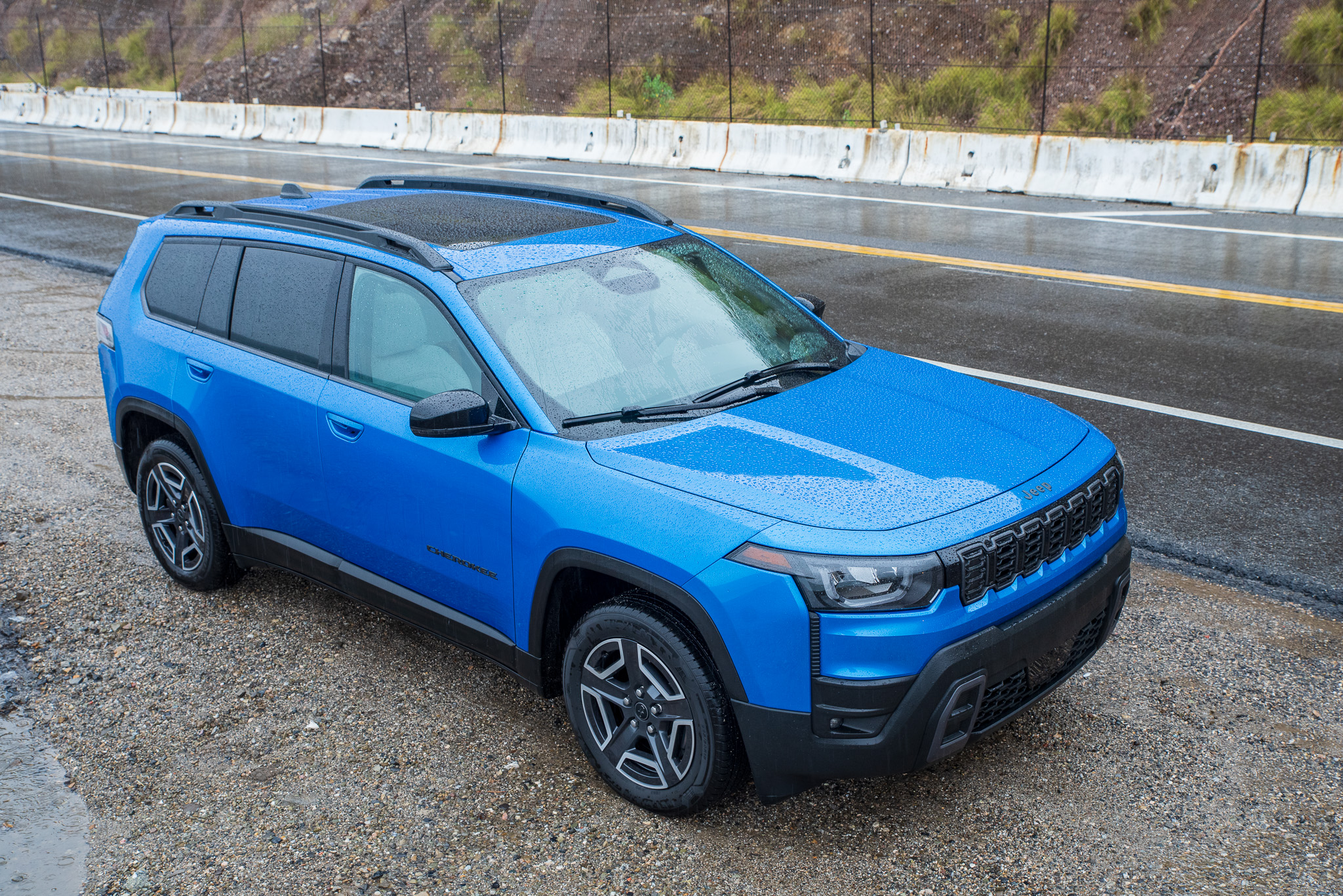
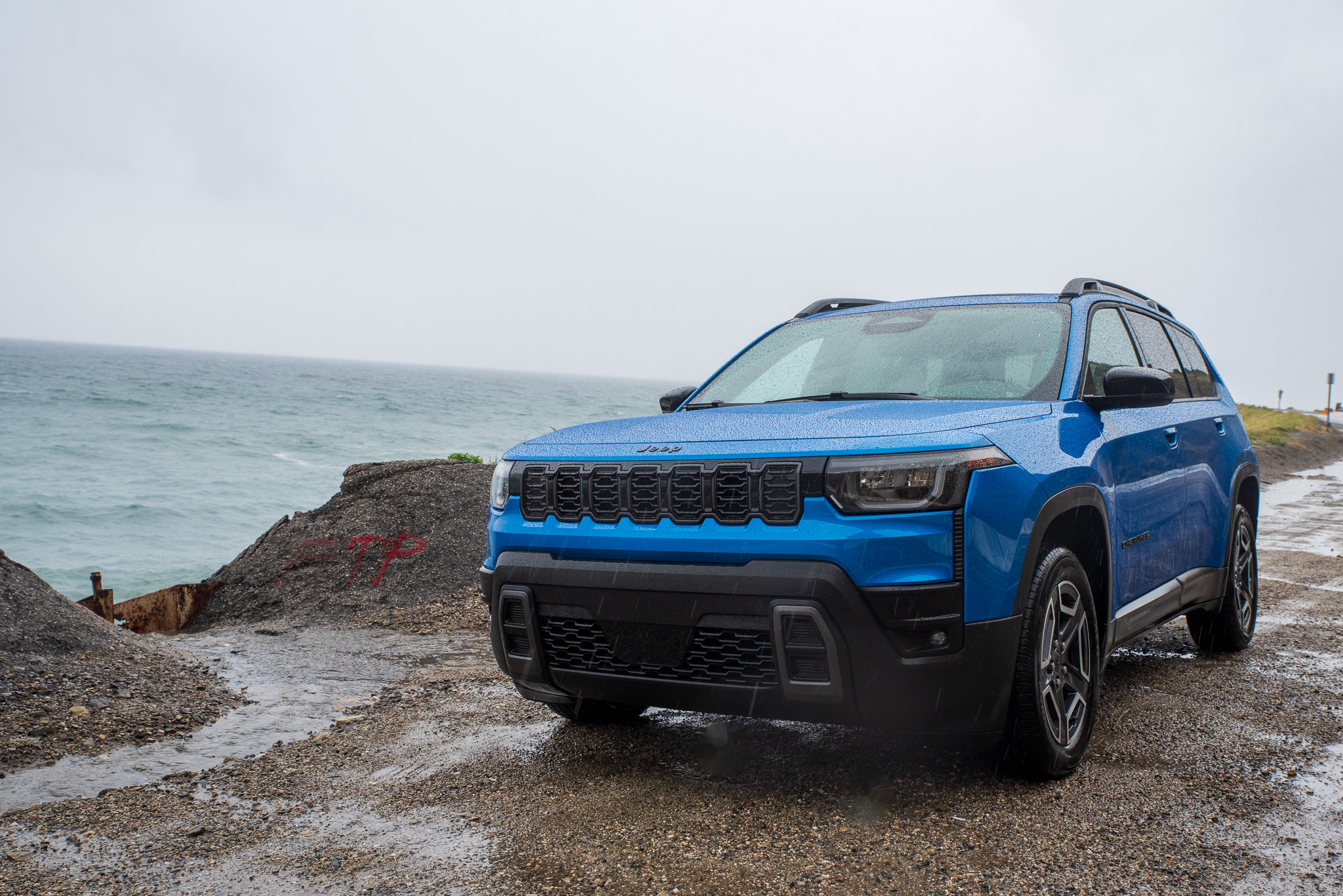
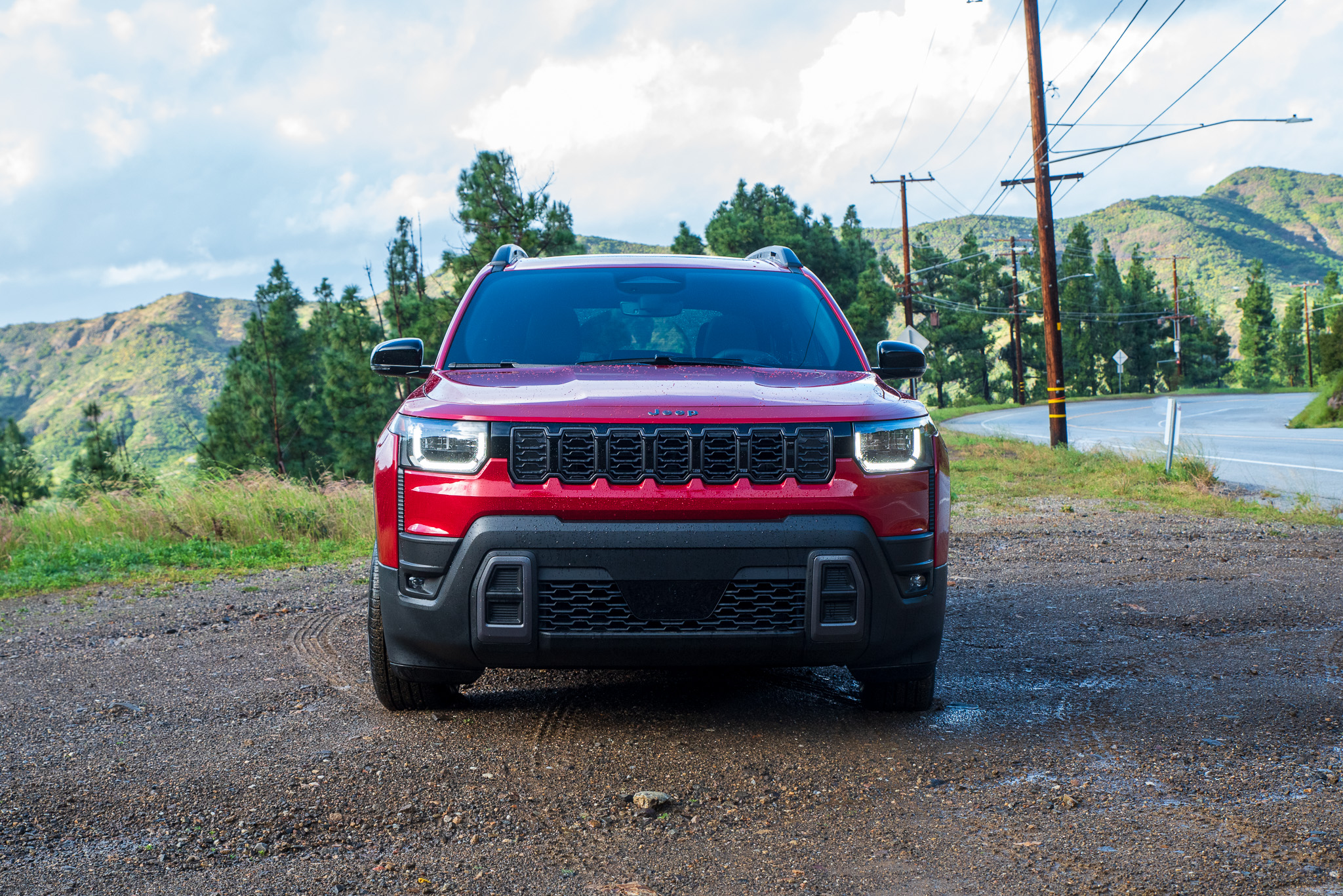
Most noteworthy after that is the Cherokee’s design. Having spent a fair bit of time on the outside of the Cherokee, taking pictures and kicking tires, I found that the rear is actually the most visually interesting. The front is mostly common fare, with a grille that’s obviously Jeep and headlights that fit inside the width of the windshield, but that abruptly cut-off back hatch… It’s something. I kept going back to it.
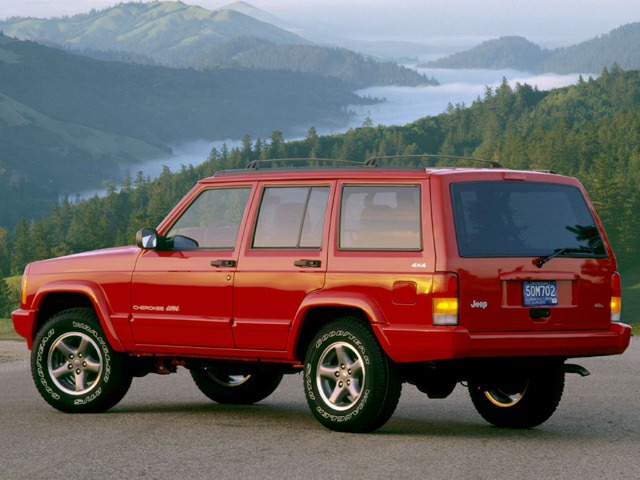
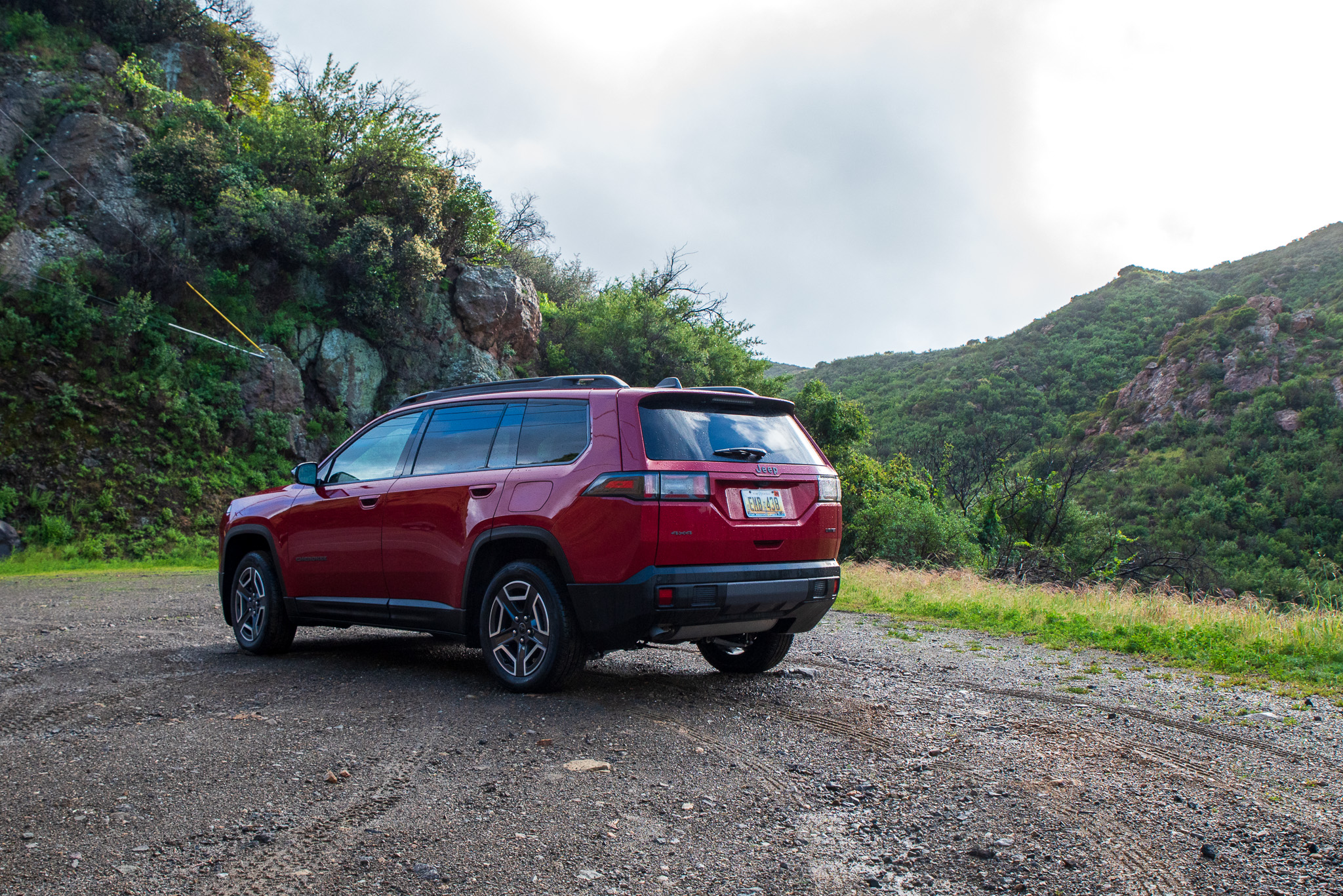
Jeep design lead Bill Zheng gave some insight into his team’s thinking there, comparing it to—what else—an XJ. It’s the biggest lookalike feature on the new Cherokee, no doubt, and it also has an added aero benefit. Fuel mileage was a key consideration everywhere in developing this car, as customers told Jeep that’s the number one reason they didn’t consider buying the last-gen model.
Even knowing that, I still was drawn to it from an aesthetic perspective.
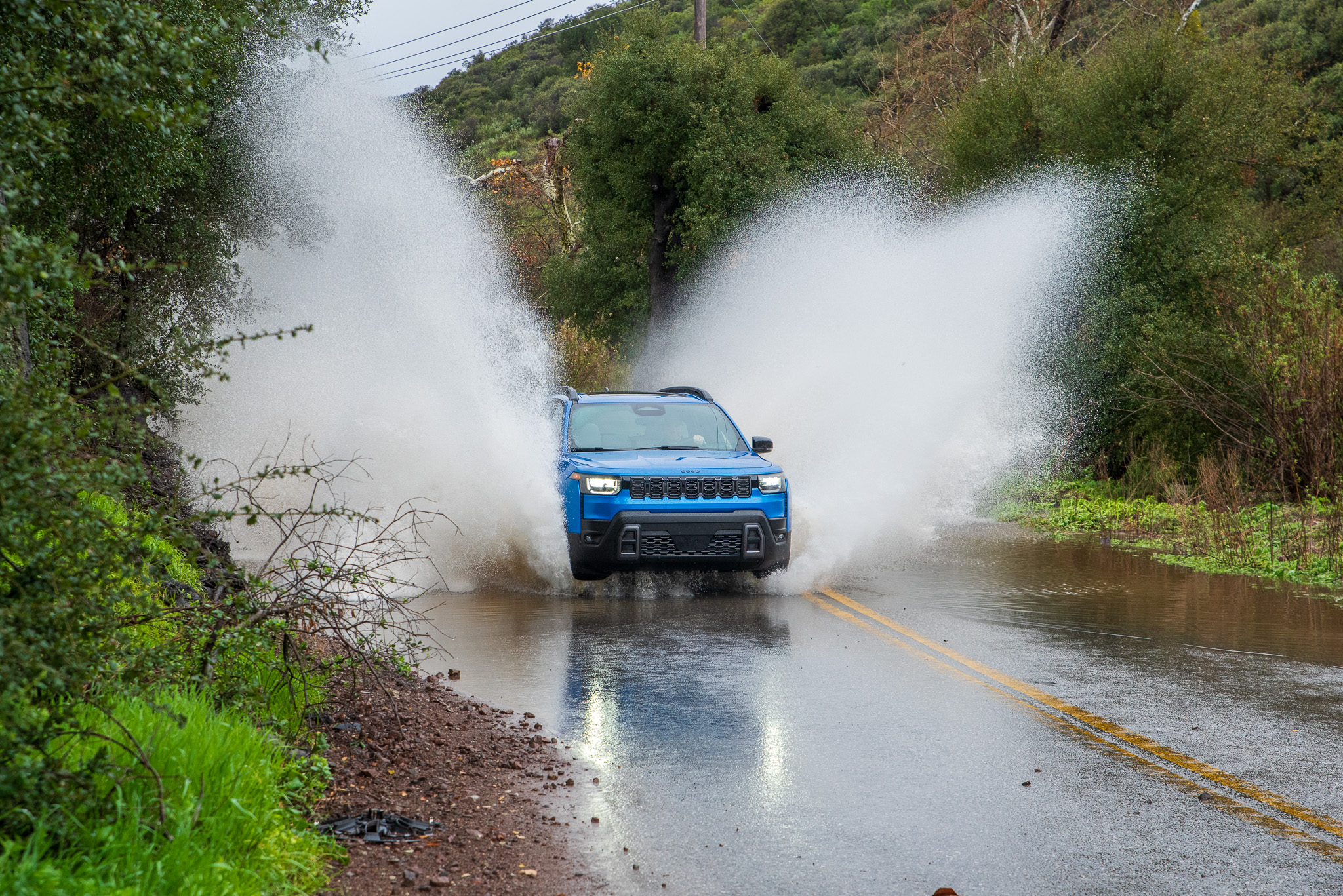
These first drive events don’t always give the best indication of what a car is like to live with. Because automakers like to host them in extremely scenic locations that show off their cars’ strengths and hide their faults, you have to sort through what’s fact and what’s crap. But even if that’s what Jeep was trying to do by putting us on a drive route that traversed canyons and coastlines, it didn’t work because the weather wasn’t having it.
In turn, I got to experience the Cherokee in a way I wouldn’t have otherwise. As a real owner might, I drove it through some straight-up nasty conditions where streams crossed the road and fist-sized rocks pockmarked both lanes. I have to say that the Cherokee did great with all that, throwing big wakes when no other cars were nearby and clearing stones that might have torn up the underside of a lower-riding crossover. I was happy to be in the Jeep during all of that.
I was also glad about the Cherokee’s solid visibility, which was aided by windshield wipers so strong that they rocked the car side to side at every stop. Really. Even the backup camera showed up in incredibly clear resolution on the infotainment screen while navigating through the monsoon in a Malibu coffee shop parking lot. (Again, Jeep had a much different day planned from the beginning.)
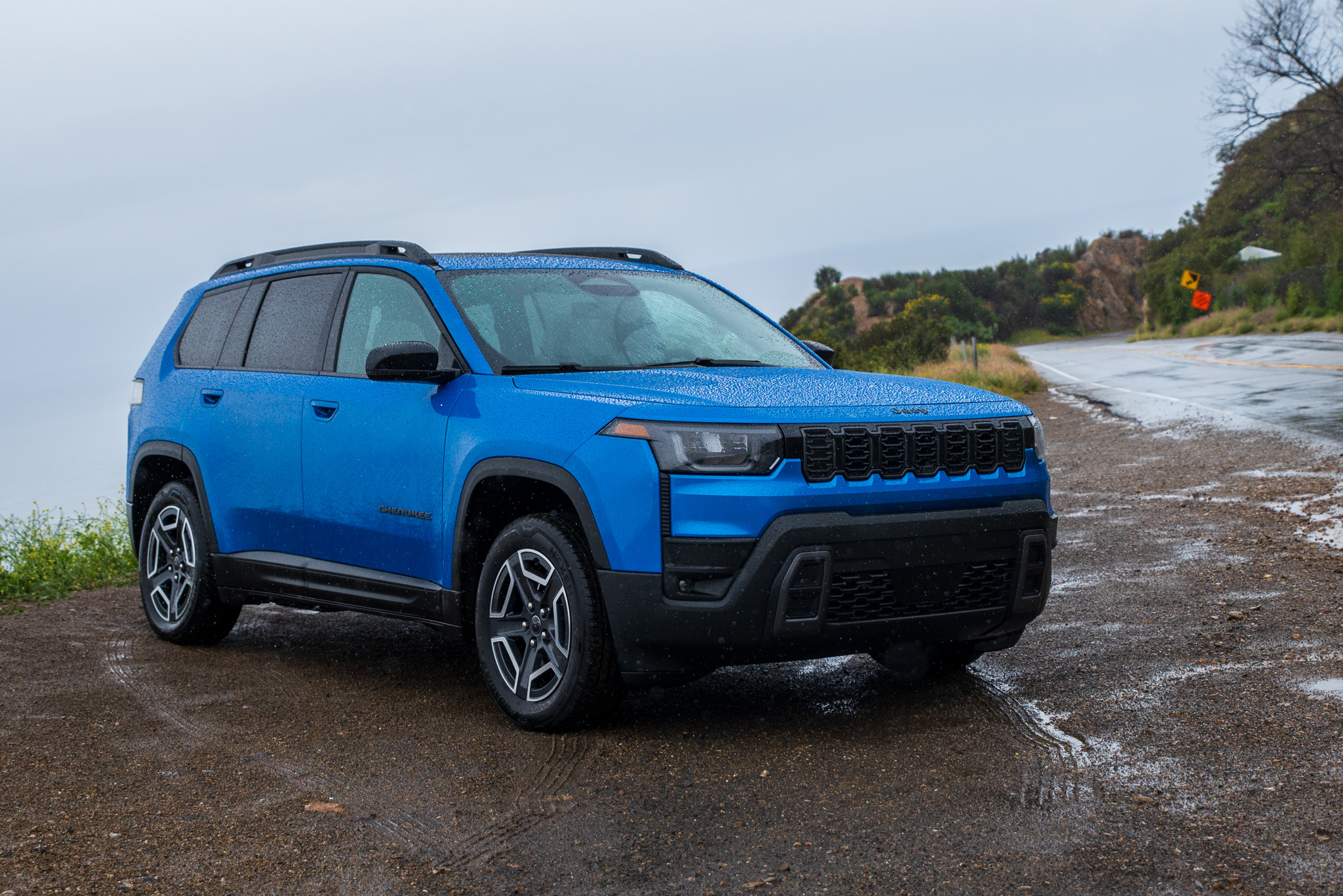
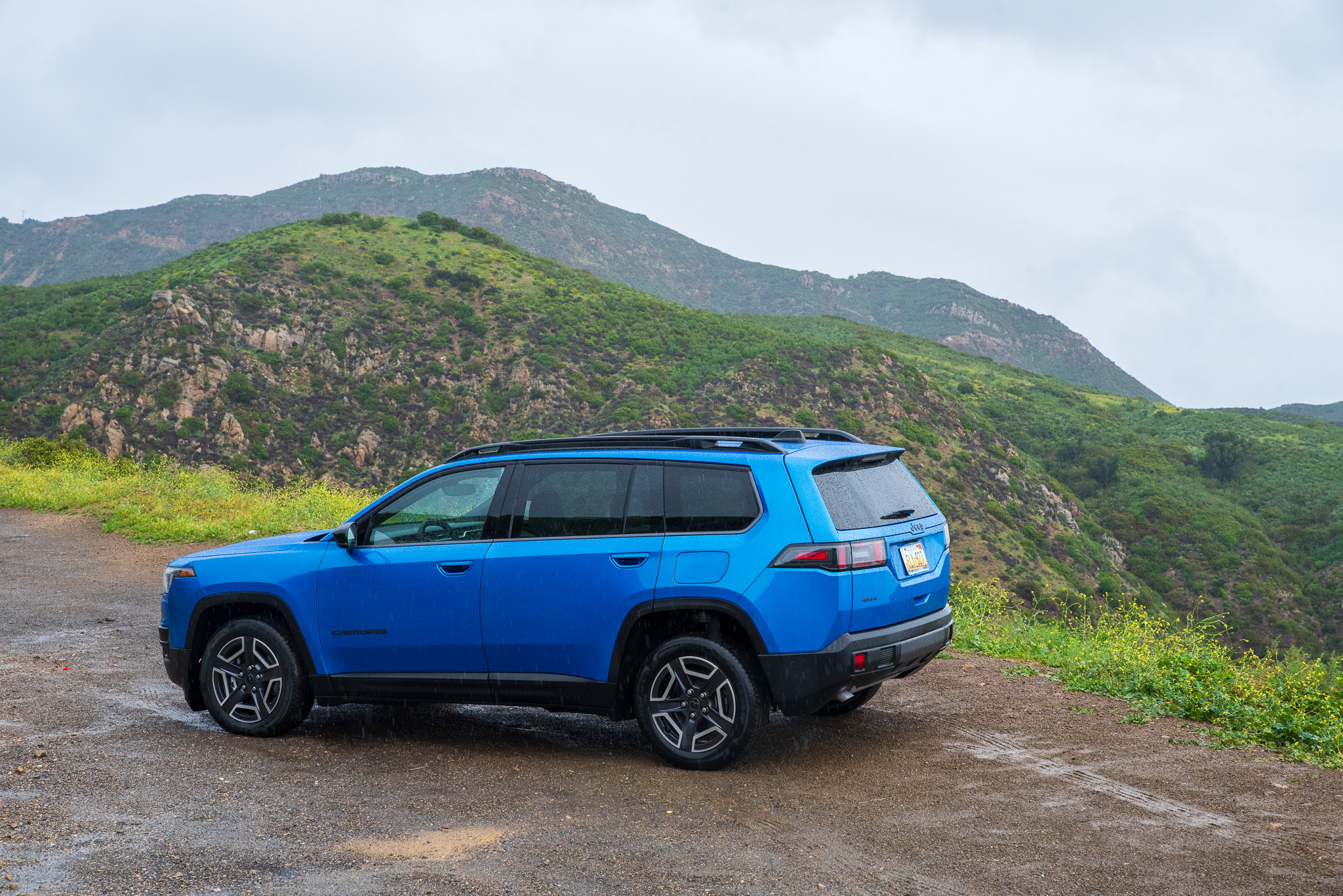
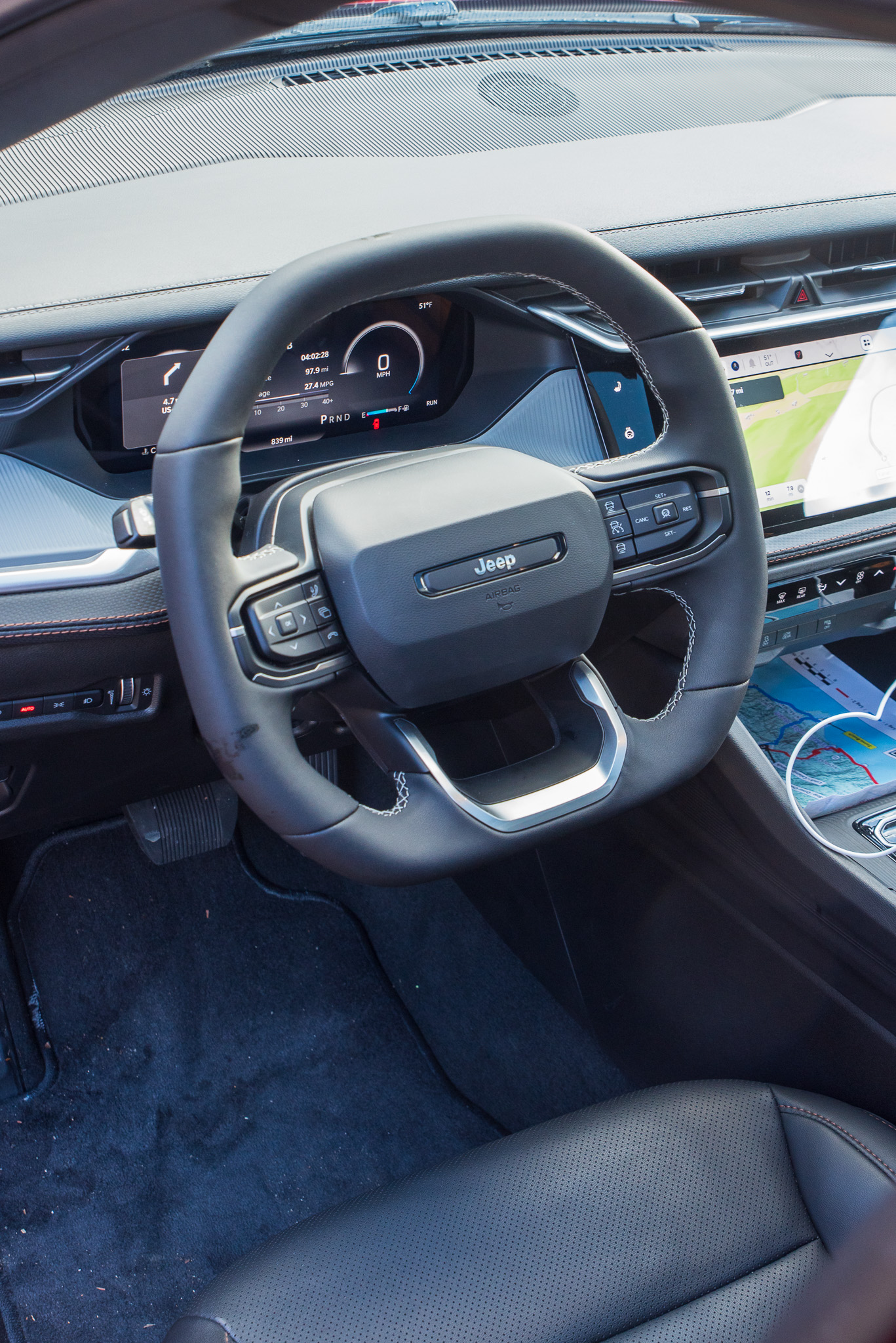
Traction and surefootedness were highlights of my Cherokee driving experience; in other words, two attributes that are top-of-mind for most Jeep buyers. The power wasn’t anything crazy, but then again, it doesn’t need to be a barnburner. It only stood out to me when climbing steep grades and the engine zinged up to an unknown rpm—there’s no dedicated tachometer, but if I had to guess, it gets noisy above 4,000 rpm and just keeps climbing.
And because it’s a hybrid, it benefits from strong regenerative braking. Long downhills are trouble-free because of that, and even though I didn’t get to wheel the Cherokee off-road, I can see how it would be a big help in low-speed situations. All these tactics helped return roughly 31 mpg during my trip, according to the onboard computer. If that sounds unimpressive to you, keep in mind that I was goosing it anywhere the road was dry-ish, and we climbed a lot of hills. In reality, it’s better than the last Cherokee could have managed in the best conditions.
Overall, my driving experience was positive. Jeep took pains to explain just how much room it added inside, and as it turns out, you can really tell there’s 30% more cargo volume. I had all the space I needed in the driver’s seat at 6’5″, and even sitting shoulder-to-shoulder with another guy about my height was comfortable. The same can’t be said of every car in this class, I assure you.
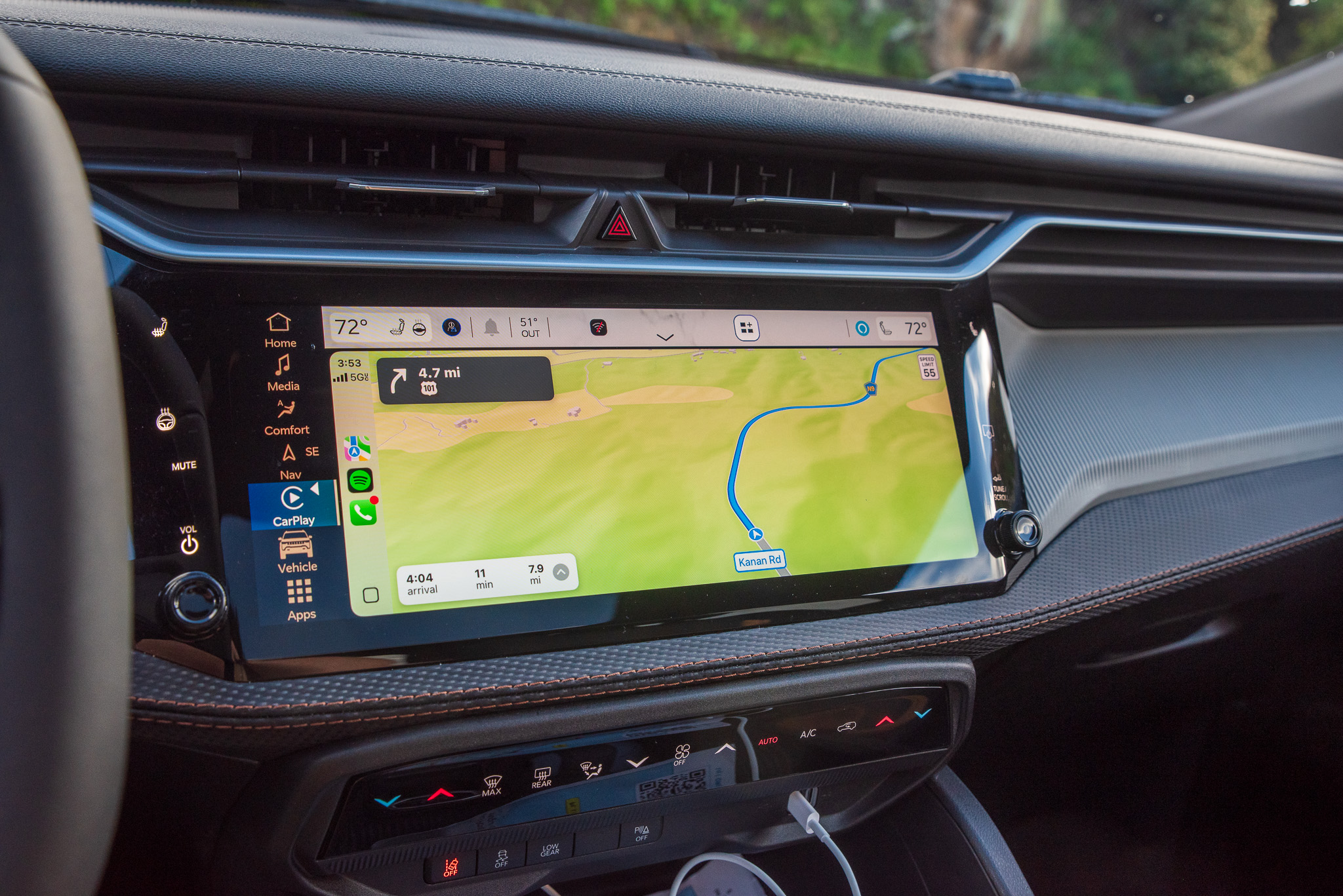
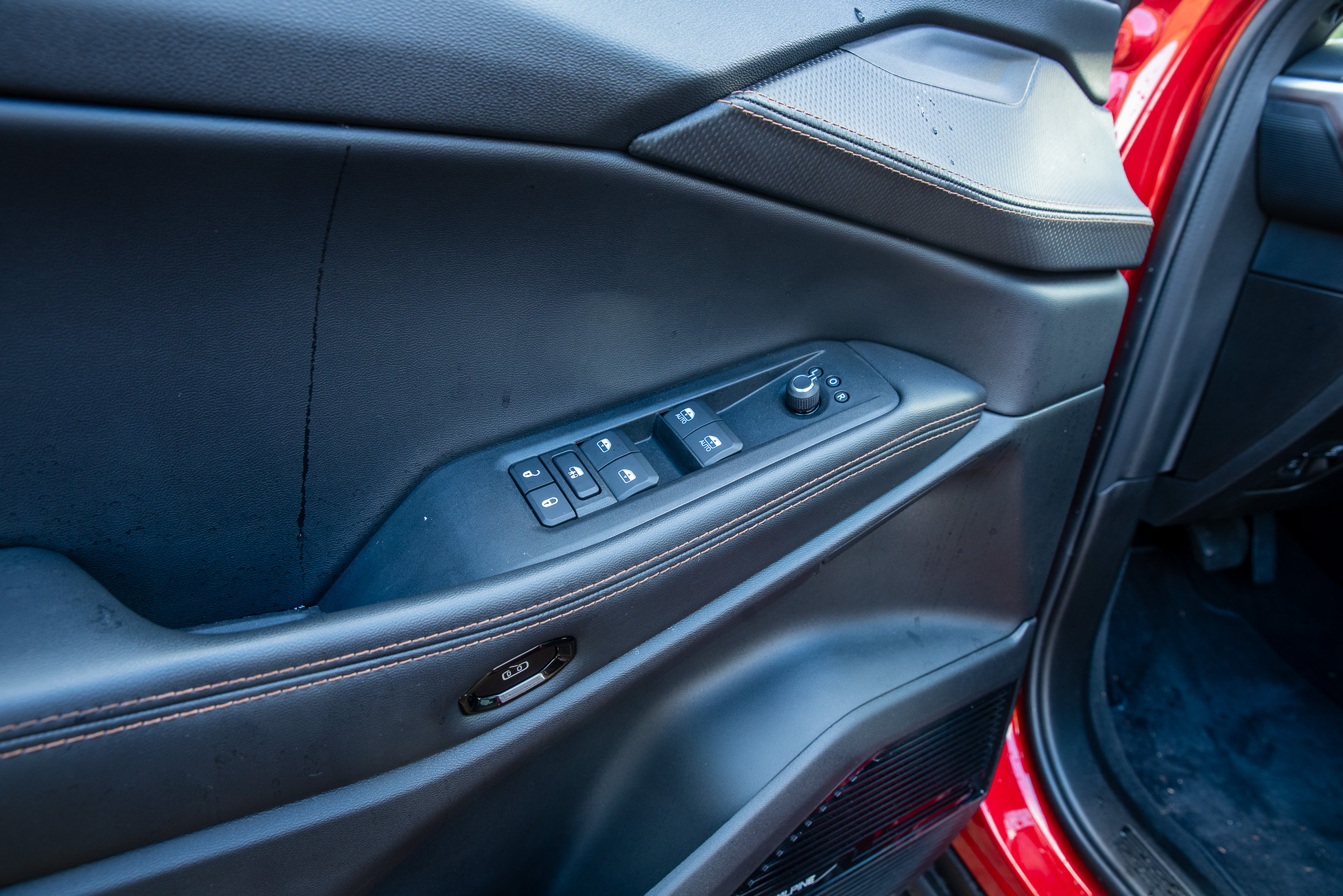
Some things I didn’t love, like the touch-capacitive HVAC buttons and the lack of a 360-degree camera, which would have come in handy. But by far the most questionable decision Jeep made with the Cherokee is push-button door handles. No car needs those, and considering how dangerous they’ve proven to be in Teslas and some Chinese EVs, I don’t know why anybody would want them. Fortunately, the interior has physical handles hidden just a short reach away from the release buttons, so I’d end up using those all the time instead.
The 2026 Cherokee has a higher starting price than its Toyota and Honda competitors, largely because it doesn’t offer a front-wheel-drive base model. Instead, it comes standard with all-wheel drive and the hybrid powertrain at $36,995. For context, the entry-level RAV4 costs $33,350 and comes standard with a hybrid; it climbs only slightly to $34,750 with AWD. A Honda CR-V Hybrid costs $38,580 once you spec it with AWD.
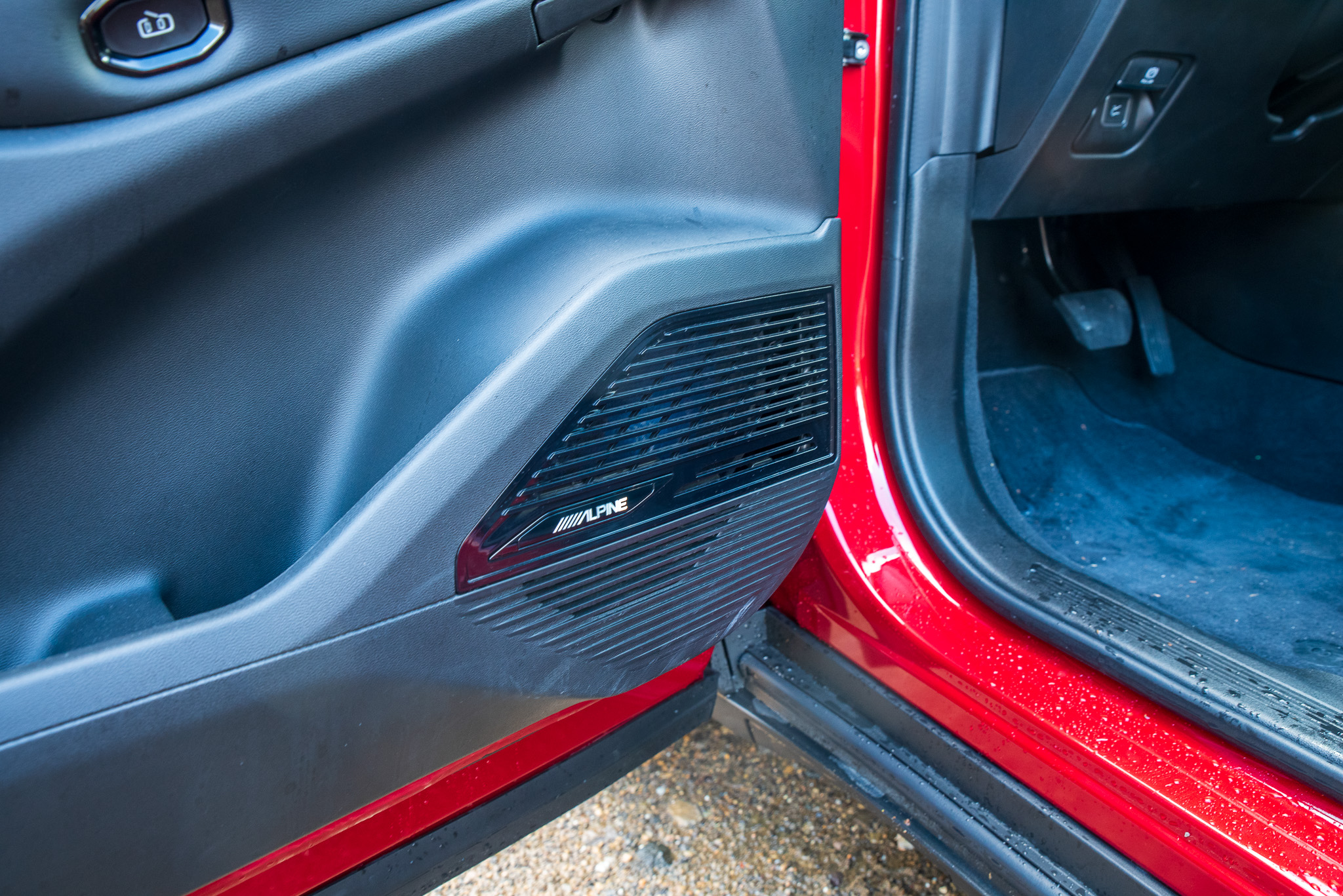
And even though the Cherokee starts just under $37,000 with destination and everything, the Laredo trim I tested was $44,585. It had some delightfully comfy seats that were heated but not ventilated, a heated steering wheel, a wireless charging pad, and more as part of a $2,000 equipment package. It also featured a dual-pane sunroof for $1,595 and a tech group with off-road info pages, GPS navigation, and an upgraded Alpine sound system with nifty speaker grilles that were oh-so-’00s for $995.
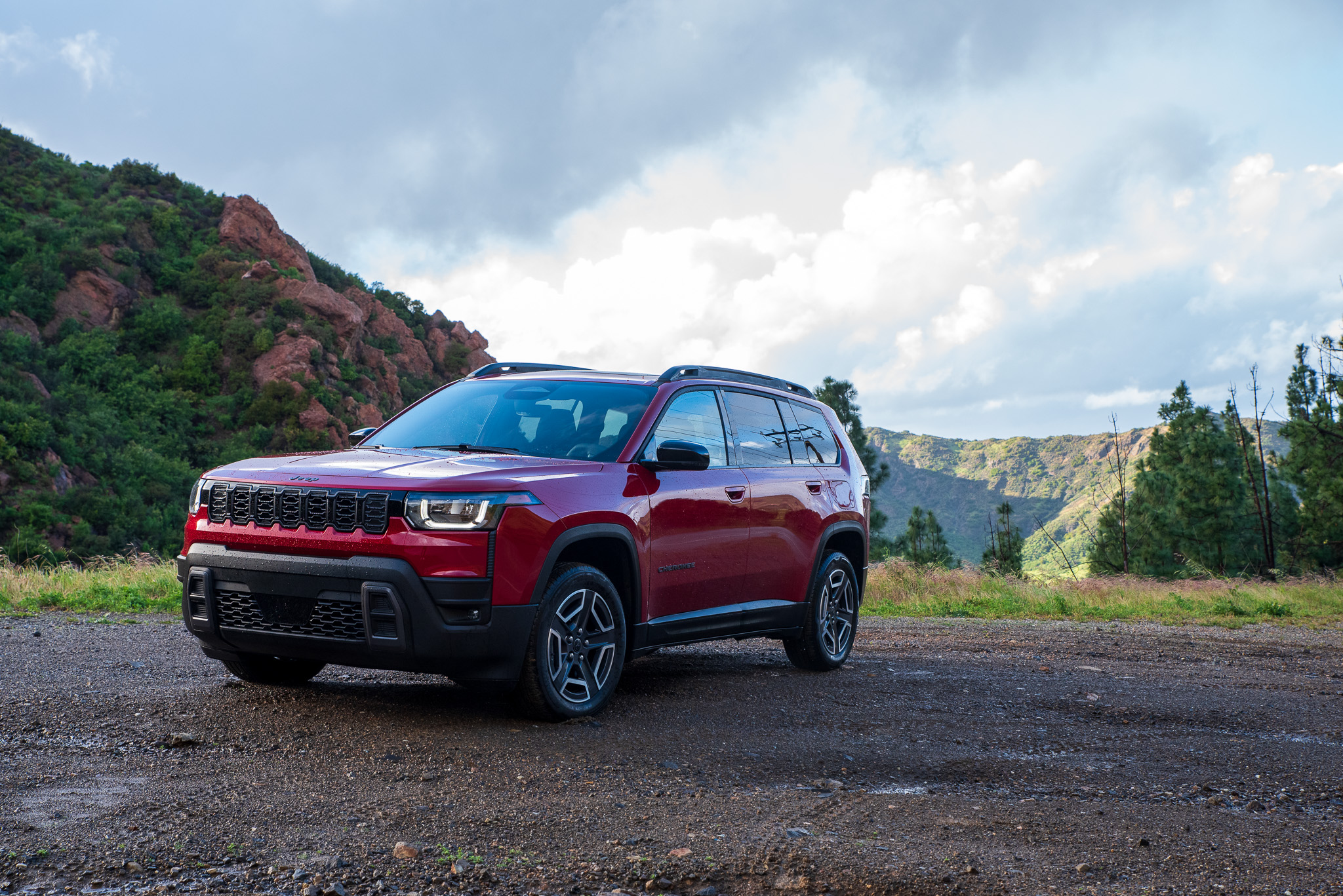
Having driven the new Jeep midsizer and some of its main competitors, I believe it’s a solid choice. The biggest question mark on any car with a new powertrain option is longevity, but if the 1.6-liter turbo hybrid earns a better rep than Jeep’s now-canceled 4xe plug-ins, I wouldn’t have a problem recommending it to folks. It has all the power you need and still manages 37 mpg, putting it squarely in the conversation for folks who value that (AKA every shopper in this segment).
Ultimately, it’s a far cry from the XJ Cherokee that car nerds love fawning over, but that’s not what Jeep set out to build. People in the enthusiast camp, which I certainly consider myself to be part of, might have wished for a barely modernized version of that rig… but we’re a small demographic in the grand scheme of things. This is a high-volume segment targeted at everyday citizens, and I think the Cherokee might be a genuinely good fit for them.
Jeep provided The Drive with travel and accommodations, along with the use of a vehicle for the purpose of writing this review.
| 2026 Jeep Cherokee Specs | |
|---|---|
| Base Price (Laredo as tested) | $36,995 ($44,585) |
| Powertrain | 1.6-liter turbo four-cylinder hybrid | electronic continuously variable transmission | all-wheel drive |
| Horsepower | 210 |
| Torque | 230 lb-ft |
| Seating Capacity | 5 |
| Curb Weight | 4,295 pounds |
| Cargo Volume | 34 cubic feet behind second row | 68 cubic feet with rear seats folded down |
| EPA Fuel Economy | 39 mpg city | 35 highway | 37 combined |
| Score | 8/10 |

Quick Take
Jeep might not have built a new XJ, but it essentially built its own RAV4.
Got a tip or question for the author? Contact them directly: caleb@thedrive.com
www.thedrive.com
#Jeep #Cherokee #Drive #Review #AntiXJ